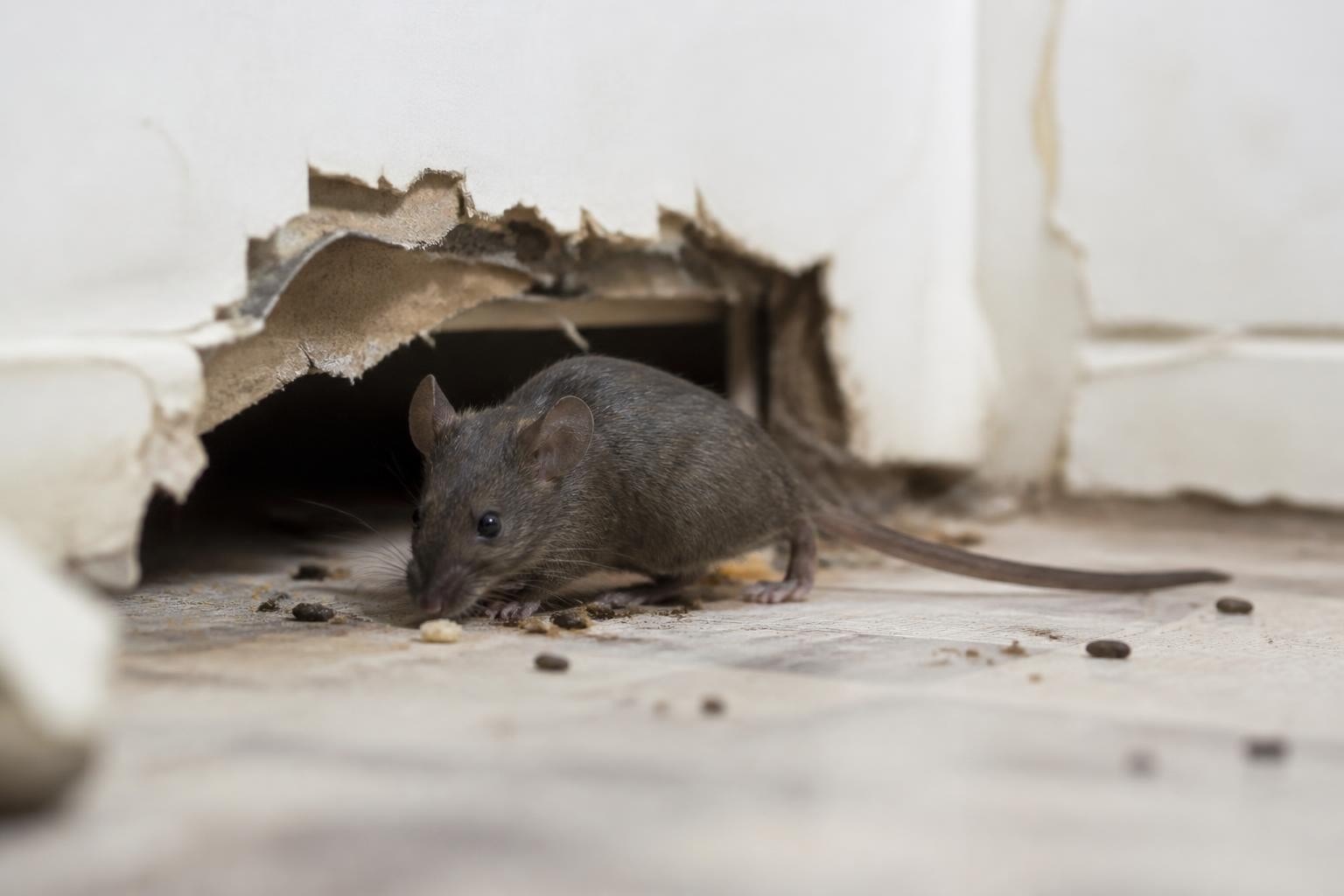
A mouse infestation in house is one of the most common pest control emergencies homeowners face in Richmond, Virginia, and across the United States. These small rodents reproduce rapidly, contaminate food supplies, damage property, and pose serious health risks to families. What begins as a single mouse scurrying across your kitchen floor can quickly escalate into a full-blown infestation involving dozens of mice nesting in your walls, attic, or crawl space. Understanding the signs, risks, and professional solutions is essential for protecting your home and family from these persistent invaders.
Understanding Mouse Behavior and Biology
House mice are remarkably adaptable creatures that thrive in human environments. An adult mouse measures just 2.5 to 3.75 inches in body length, with a tail roughly equal in size, making them capable of squeezing through openings as small as a dime. Their small size, combined with exceptional climbing and jumping abilities, allows them to access virtually any part of your home.
Key biological facts about house mice:
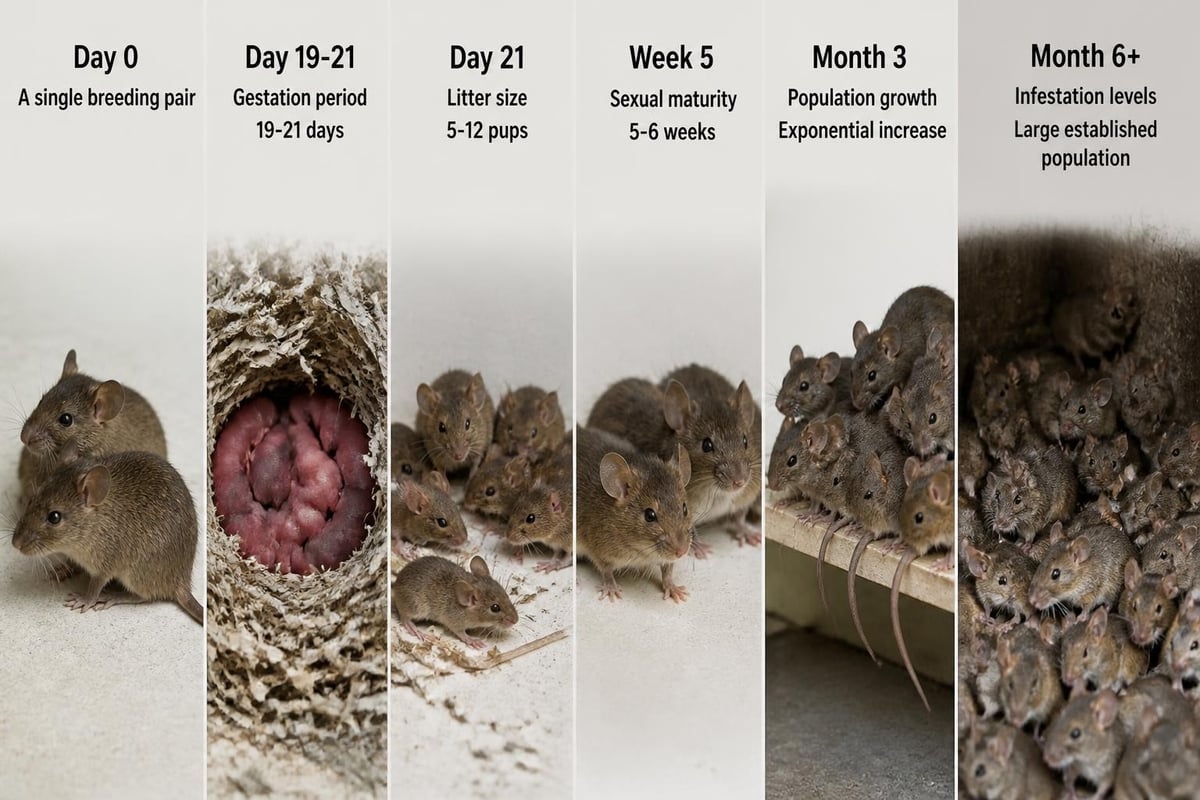
- Gestation period of just 19-21 days
- Litters of 5-6 pups, up to 8 times per year
- Sexual maturity reached at 6 weeks of age
- Lifespan of 9-12 months in the wild, up to 2 years indoors
- Nocturnal activity patterns with peak foraging at dusk and dawn
A single breeding pair can produce more than 60 offspring in one year under ideal conditions. This exponential reproduction rate explains why early detection and intervention are critical when dealing with a mouse infestation in house situations. According to University of California’s Integrated Pest Management program, house mice are the most commonly encountered commensal rodent, meaning they live in close association with humans.
Seasonal Patterns in Richmond VA
Richmond's climate creates distinct seasonal patterns for rodent activity. Mice seek indoor shelter as temperatures drop in late September and October, with peak intrusion occurring between November and February. However, modern climate-controlled homes provide year-round habitats, meaning infestations can establish during any season.
Spring and summer bring additional challenges as outdoor populations expand and young mice disperse to establish new territories. Homes near wooded areas, agricultural fields, or commercial districts experience higher pressure from migrating mice populations.
Recognizing the Warning Signs
Early detection dramatically improves treatment outcomes and reduces remediation costs. Most homeowners first notice indirect evidence rather than actually seeing mice, since these rodents are naturally cautious and primarily nocturnal.
Physical Evidence
Droppings are the most common indicator of mouse activity. Fresh droppings appear dark, moist, and soft, measuring approximately 1/8 to 1/4 inch long with pointed ends. A single mouse produces 50-75 droppings daily, so discovering even a few pellets suggests ongoing activity. Common locations include:
- Kitchen drawers and cabinets
- Along baseboards and in corners
- Behind appliances
- Inside pantries and storage areas
- Attic insulation and storage boxes
- Crawl space perimeters
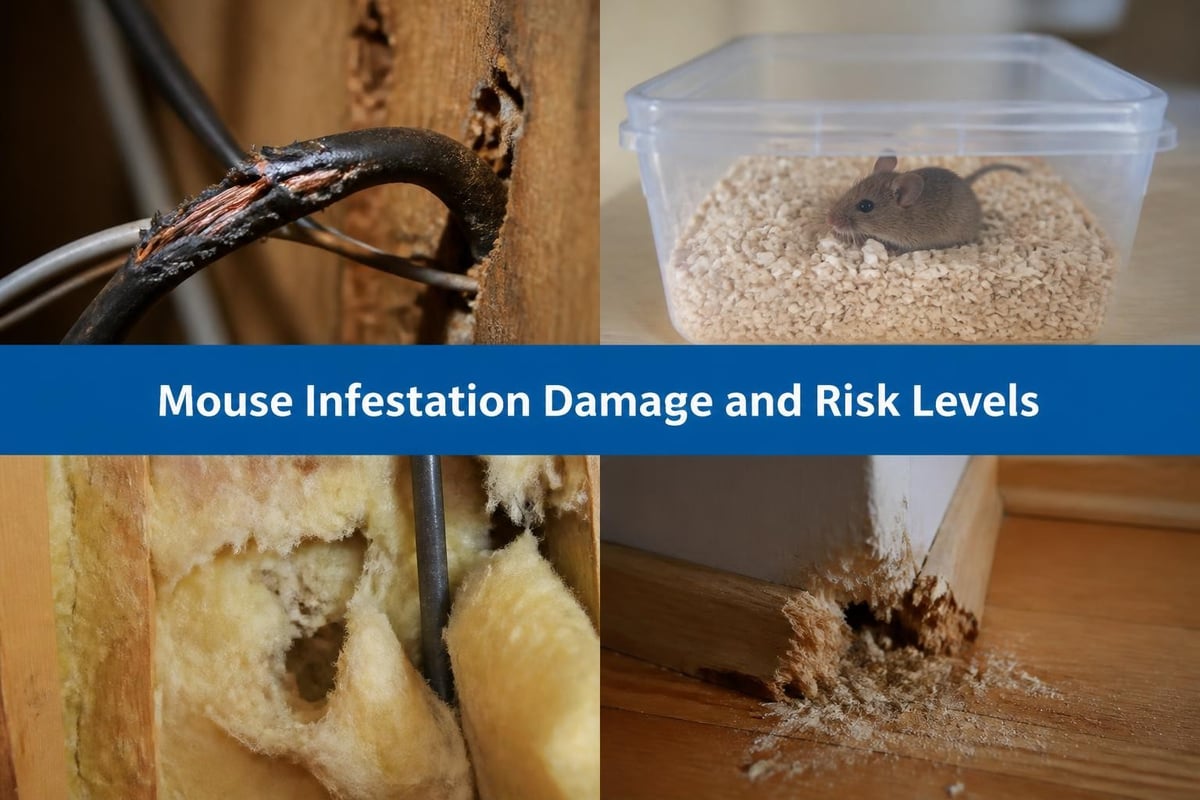
Gnaw marks indicate active feeding and nesting material collection. Mice must constantly gnaw to keep their continuously growing incisors trimmed. Fresh gnaw marks appear lighter in color, while older damage darkens with age. Examine:
| Material | Risk Level | Common Locations |
|---|---|---|
| Electrical wiring | Critical fire hazard | Walls, attics, appliances |
| Food packaging | Contamination risk | Pantries, cabinets |
| Wood framing | Structural concern | Baseboards, door frames |
| Insulation | Nesting material | Attics, crawl spaces |
Rub marks or smudges appear along frequently traveled pathways. Mice have poor vision and navigate by touch, repeatedly using the same routes. Their oily fur deposits dark streaks along walls, pipes, and beams.
Auditory and Olfactory Clues
Scratching, scurrying, or squeaking sounds in walls, ceilings, or under floors typically occur during evening hours when mice are most active. These noises intensify as populations grow and competition for resources increases.
A distinctive musky odor develops as infestations mature. Mice communicate through urine marking, creating strong ammonia-like smells in enclosed spaces like cabinets, closets, and storage areas. This odor becomes particularly noticeable in areas with poor ventilation.
Visual Confirmation
Seeing a mouse during daylight hours strongly suggests a mouse infestation in house has reached significant levels. Mice are naturally nocturnal and avoid human contact; daytime sightings indicate overcrowding or depleted food sources forcing increased foraging activity.
Tracking powder or monitoring devices help confirm activity patterns. Cornell University’s Integrated Pest Management program recommends monitoring techniques to establish population density and treatment effectiveness.
Health Risks and Property Damage
The dangers of a mouse infestation in house extend far beyond the nuisance factor. These rodents threaten both human health and structural integrity in multiple ways.
Disease Transmission
Mice carry numerous pathogens transmissible to humans through:
- Direct contact with rodents, droppings, or urine
- Indirect contact via contaminated surfaces or food
- Airborne particles from dried excrement or nesting materials
- Arthropod vectors like fleas, mites, and ticks
Hantavirus represents the most serious health threat associated with rodent infestations. This potentially fatal respiratory disease transmits through inhalation of virus particles from disturbed droppings or urine. According to the UK National Health Service, early symptoms include fever, muscle aches, and fatigue, progressing to severe respiratory distress in serious cases.
Additional diseases include:
- Salmonellosis (food poisoning)
- Leptospirosis (bacterial infection)
- Lymphocytic choriomeningitis (viral infection)
- Rat-bite fever
- Plague (rare but documented)
Immunocompromised individuals, children, elderly residents, and pregnant women face elevated risks from rodent-borne pathogens.
Contamination and Allergens
A single mouse deposits micro-droplets of urine constantly as it travels, contaminating surfaces throughout your home. Food preparation areas become particularly hazardous as mice walk across counters, climb into open packages, and leave droppings in cabinets and drawers.
Mouse allergens accumulate in house dust, triggering or exacerbating respiratory conditions like asthma. Proteins in mouse urine act as potent allergens, affecting sensitive individuals even after the infestation has been eliminated.
Structural and Property Damage
The economic impact of a mouse infestation in house can be substantial:
Electrical system damage creates serious fire hazards. The National Fire Protection Association estimates rodents cause 20,000-25,000 structure fires annually in the United States through insulation damage on wiring. Mice cannot distinguish electrical cables from other materials and will gnaw through protective coatings, exposing live wires.
Insulation degradation occurs when mice nest in attic or wall insulation, compressing and contaminating materials. For Richmond VA homeowners dealing with compromised insulation services, rodent damage often necessitates complete removal and replacement to restore thermal efficiency and eliminate health hazards.
HVAC system contamination spreads allergens and pathogens throughout the home. Mice nesting in ductwork or near air handlers create distribution networks for contaminated particles every time the system operates.
Entry Points and Vulnerability Assessment
Understanding how mice access your home is fundamental to long-term prevention. Richmond's housing stock ranges from historic homes with aged foundations to modern construction, each presenting unique vulnerabilities.
Common Entry Locations
Mice exploit any gap measuring 1/4 inch or larger. Penn State Extension’s urban pest guide emphasizes that exclusion begins with thorough property inspection.
Foundation and crawl space areas:
- Cracks in concrete or masonry
- Gaps around utility penetrations (water, gas, electrical)
- Deteriorated mortar joints
- Foundation vents without proper screening
- Crawl space access doors with poor seals
Exterior walls and roofline:
- Gaps around window and door frames
- Damaged weather stripping
- Roof-to-wall junctions
- Soffit and fascia gaps
- Dryer and exhaust vents without dampers
- Cable, phone, and internet line entry points
Interior pathways:
- Gaps around interior pipes
- Spaces behind baseboards
- Shared walls in townhouses or multi-unit buildings
- Garage door thresholds
Seasonal Vulnerability Factors
Richmond's freeze-thaw cycles create expanding cracks in foundations and mortar. Summer heat causes expansion gaps, while winter contraction pulls joints apart. Annual inspection before fall temperatures drop helps identify new vulnerabilities before peak intrusion season.
Storm damage from hurricanes, severe thunderstorms, or winter weather creates sudden entry opportunities. Missing roof shingles, damaged siding, or displaced foundation vents require immediate repair to prevent rodent access.
Prevention Strategies for Homeowners
Preventing a mouse infestation in house requires an integrated approach combining sanitation, exclusion, and environmental modification. These proactive measures significantly reduce infestation risk and complement professional pest control services.
Sanitation and Housekeeping
Food storage protocols:
- Transfer dry goods from cardboard or paper packaging to sealed glass or heavy plastic containers
- Clean up spills immediately, including crumbs behind appliances
- Store pet food in sealed containers and remove bowls between feedings
- Keep garbage in sealed containers and dispose regularly
- Clean under and behind appliances quarterly
- Wash dishes promptly rather than leaving overnight
Clutter reduction:
Minimize storage clutter, especially cardboard boxes which provide ideal nesting material. Elevate stored items on shelving rather than placing directly on floors. Organize garages, basements, and storage areas to eliminate hiding spots and simplify inspection.
Landscape and Exterior Management
Maintain a 2-foot vegetation-free zone around your foundation. Trim shrubs, remove leaf litter, and eliminate ground cover touching exterior walls. This creates a hostile environment for mice and improves visibility during inspections.
Outdoor attractants to eliminate:
- Bird feeders (fallen seed attracts rodents)
- Compost bins without proper construction
- Woodpiles against house walls
- Dense ivy or ground cover
- Standing water sources
- Outdoor pet food
Store firewood at least 20 feet from structures and elevate stacks 12-18 inches off the ground. Inspect loads before bringing wood indoors.
Exclusion and Structural Maintenance
Critical exclusion materials:
| Material | Application | Durability |
|---|---|---|
| 1/4-inch hardware cloth | Foundation vents, larger gaps | Excellent, lasts decades |
| Copper mesh (Stuf-fit) | Utility penetrations, irregular gaps | Excellent, won't rust |
| Sheet metal | Kick plates, door thresholds | Excellent for high-wear areas |
| Expanding foam (wire-reinforced) | Wall voids, temporary seal | Fair, requires protection |
| Concrete patch | Foundation cracks | Excellent for structural repair |
Never use standard spray foam, steel wool, or plastic materials alone-mice will gnaw through these materials. All exclusion work should be permanent and resist both gnawing and weather deterioration.
Inspect and maintain:
- Door sweeps and thresholds quarterly
- Window screens for tears or gaps
- Garage door seals annually
- Foundation vents before winter
- Roof flashings and penetrations
The World Health Organization’s rodent-proofing guidance provides comprehensive building standards for rodent exclusion applicable to residential construction.
Professional Inspection and Assessment
While homeowners can implement many preventative measures, professional pest control inspection provides expertise and equipment unavailable to most property owners. Richmond VA pest control specialists understand local rodent behavior patterns, seasonal pressures, and construction vulnerabilities specific to the region.
What Professional Inspection Includes
Comprehensive exterior assessment:
Trained technicians examine the entire building envelope, identifying active entry points, potential vulnerabilities, and conducive conditions. Thermal imaging cameras detect heat signatures from rodent activity in walls and voids. Moisture meters identify water intrusion that attracts rodents.
Interior investigation:
- Detailed examination of all floors, including basements and attics
- Inspection of mechanical rooms and utility areas
- Assessment of food storage and preparation areas
- Identification of droppings, urine stains, and rub marks
- Analysis of structural damage patterns
Population estimation:
Professionals use monitoring devices, feeding indices, and activity evidence to estimate infestation severity. This information drives treatment planning and helps set realistic elimination timelines.
Crawl Space and Substructure Examination
Many Richmond homes have crawl space foundations that create ideal mouse harborage. These dark, undisturbed areas with insulation and moisture provide perfect nesting environments. Crawl Space Services often intersect with rodent control, as moisture problems attract mice and other pests while creating conditions for structural damage and mold growth.
Professional crawl space inspection reveals:
- Active rodent nesting sites
- Entry points through foundation vents or gaps
- Contaminated or damaged insulation requiring replacement
- Moisture issues contributing to pest activity
- Structural damage to floor joists or subflooring
Treatment and Elimination Methods
Eliminating an established mouse infestation in house requires systematic approach combining multiple control methods. Treatment selection depends on infestation severity, property characteristics, and occupant considerations.
Mechanical Trapping
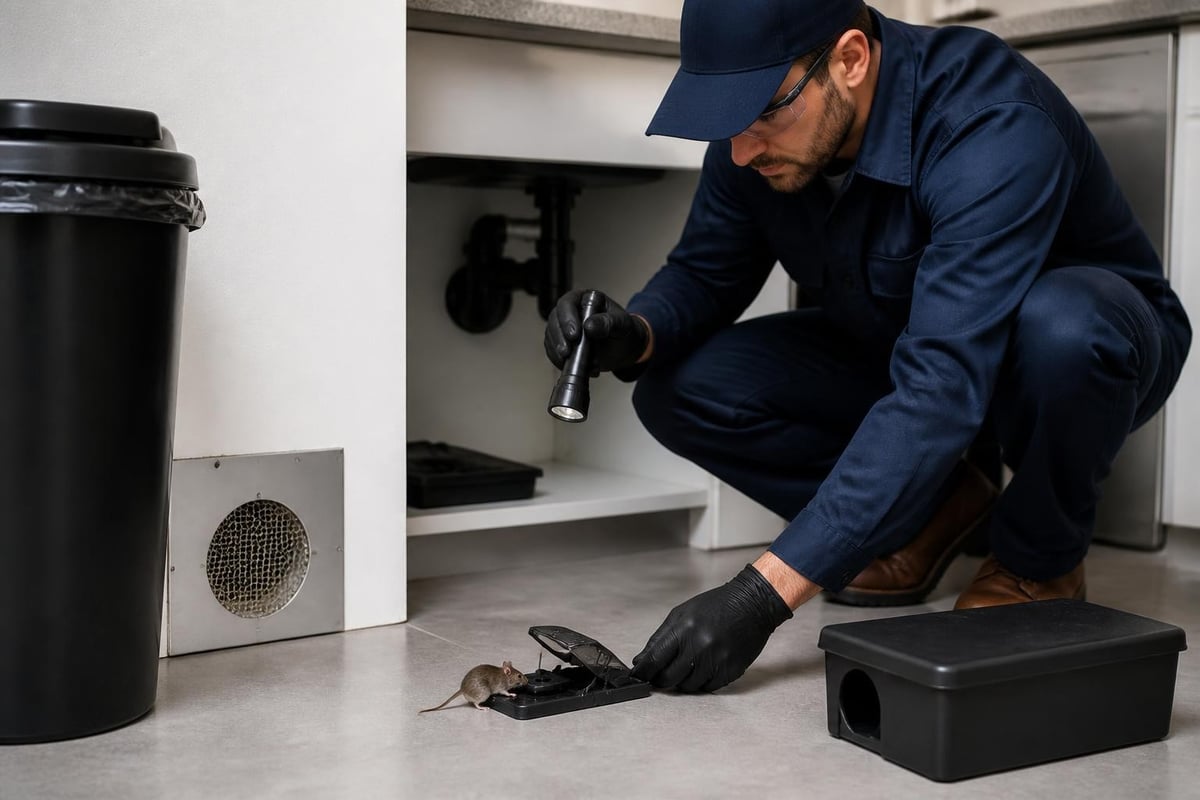
Trapping remains the safest and most effective primary control method for residential infestations. Modern snap traps, when properly deployed, quickly reduce populations without introducing toxins into the living environment.
Trap placement strategy:
- Position traps perpendicular to walls with trigger end against the baseboard
- Space traps 10-15 feet apart along travel routes
- Place multiple traps in high-activity areas
- Secure traps to prevent removal by children or pets
- Check daily and reset immediately after captures
Effective baits include:
- Peanut butter (most reliable)
- Chocolate or hazelnut spread
- Bacon or dried meat
- Nesting material like cotton or dental floss (during nesting season)
Electronic traps provide quick, humane kills and easy disposal. Multiple-catch live traps work for situations requiring non-lethal removal, though euthanasia or distant relocation becomes necessary as mice cannot be successfully relocated nearby.
Chemical Control Considerations
Rodenticides play limited roles in residential mouse control due to safety concerns and secondary risks. The EPA’s rodent control pesticide safety review restricts many products previously available for consumer use.
Anticoagulant rodenticides cause internal bleeding over 3-7 days. Second-generation products pose serious risks to children, pets, and wildlife through primary and secondary poisoning. Most are now restricted to professional use in tamper-resistant bait stations.
Critical rodenticide concerns:
- Mice dying in inaccessible wall voids create odor problems
- Non-target species exposure risks
- Resistance development in rodent populations
- Delayed effects complicate source elimination
- Legal restrictions on residential use
Professional pest control services access commercial-grade products unavailable to homeowners and deploy them according to strict protocols minimizing risks while maximizing effectiveness.
Integrated Pest Management Protocol
The most successful long-term strategy combines multiple tactics in a coordinated program:
Phase 1: Immediate population reduction
Deploy intensive trapping to quickly reduce breeding populations and relieve pressure.
Phase 2: Sanitation and exclusion
Eliminate food sources and entry points while trapping continues.
Phase 3: Monitoring and maintenance
Install permanent monitoring stations to detect new activity before infestations re-establish.
Phase 4: Environmental modification
Address landscape issues, moisture problems, and structural conditions supporting rodent activity.
According to UC IPM’s comprehensive pest notes, integrated approaches provide superior long-term control compared to single-method treatments.
When to Call Professional Pest Control
While small intrusions may respond to diligent homeowner efforts, certain situations require professional pest control expertise from experienced Richmond VA exterminators.
Indicators Requiring Professional Service
Severity markers:
- Multiple mice sightings, especially during daylight
- Widespread droppings throughout the home
- Evidence in multiple rooms or floors simultaneously
- Nests discovered in living spaces
- Aggressive behavior or lack of fear in observed mice
- Persistent reinfestation despite homeowner control efforts
Health and safety concerns:
- Immunocompromised household members
- Young children or elderly residents
- Pregnant women in the home
- Known or suspected hantavirus exposure
- Extensive contamination requiring professional remediation
Structural complications:
- Inaccessible infestation sites (walls, ceilings, subfloors)
- Damage to electrical systems
- Compromised insulation requiring replacement
- Shared walls in multi-unit buildings
- Commercial properties requiring documentation
Professional Service Advantages
Licensed pest control operators bring specialized knowledge, professional-grade materials, and systematic approaches that dramatically improve outcomes. Pest control services in Richmond VA provide comprehensive solutions addressing both immediate elimination and long-term prevention.
Professional capabilities include:
- Advanced detection equipment and monitoring technology
- Access to restricted-use control products
- Structural repair and exclusion expertise
- Contamination cleanup and sanitization
- Documentation for insurance or real estate transactions
- Ongoing monitoring and warranty programs
Reputable pest control companies provide detailed service reports, treatment records, and prevention recommendations. They work systematically through elimination protocols, adjusting strategies based on monitoring results until complete eradication is confirmed.
Long-Term Monitoring and Prevention
Successfully eliminating a mouse infestation in house marks only the beginning of effective rodent management. Preventing reinfestation requires ongoing vigilance and proactive maintenance.
Establishing Monitoring Systems
Permanent monitoring stations placed in strategic locations provide early warning of new mouse activity. These tamper-resistant devices protect monitoring materials from non-target species while allowing mouse access.
Optimal monitoring locations include:
- Along exterior foundation perimeters
- In garages and storage areas
- Basement and crawl space entry points
- Near known historical entry points
- Kitchen and pantry areas
Check monitoring stations monthly initially, extending to quarterly intervals after 6-12 months without activity. Fresh droppings, disturbed bait, or other evidence triggers immediate investigation and response.
Seasonal Maintenance Checklist
Fall preparation (September-October):
- Inspect and repair all exclusion work before temperatures drop
- Clean gutters and ensure proper drainage away from foundation
- Trim vegetation to maintain clearance zones
- Seal any new cracks or gaps discovered during summer
- Stock monitoring stations with fresh attractants
- Schedule professional inspection if previous issues occurred
Spring assessment (April-May):
- Inspect for winter damage to exclusion materials
- Check attic and crawl space for winter nesting activity
- Clean and sanitize areas with evidence of rodent activity
- Repair storm damage that may have created new entry points
- Evaluate landscape changes needed for summer growth
Year-round practices:
- Weekly kitchen and pantry inspection for signs of activity
- Monthly exterior walk-around checking foundation and entry points
- Quarterly professional monitoring service
- Immediate response to any evidence of renewed activity
Building Resilience into Property Management
Documentation practices:
Maintain detailed records of all rodent control activities, including inspection findings, treatment dates, materials used, and outcomes. Photograph exclusion work, damage, and repairs. This documentation proves valuable for insurance claims, real estate transactions, and tracking long-term patterns.
Neighborhood awareness:
Mouse populations often fluctuate across entire neighborhoods due to food availability, construction activity, or weather events. Communication with neighbors about control efforts helps identify area-wide issues requiring coordinated responses.
Properties adjacent to vacant lots, commercial areas, restaurants, or agricultural land experience persistent pressure from surrounding rodent populations. Extra vigilance and enhanced exclusion become necessary in these high-pressure locations.
Integration with Overall Home Maintenance
Rodent prevention naturally integrates with general home maintenance programs. Regular plumbing inspections identify leaks creating moisture attractive to mice. Routine roof maintenance prevents water damage and entry points. Annual HVAC servicing ensures sealed ductwork and proper system operation.
Consider rodent risk when planning renovations or additions. New construction provides opportunities to install rodent-resistant materials and design features preventing future problems. Ensure contractors seal all penetrations and maintain exclusion standards during work.
Special Considerations for Richmond VA Properties
Richmond's unique characteristics influence mouse infestation patterns and control strategies. Understanding these local factors helps homeowners and pest control professionals develop more effective management approaches.
Historic Home Challenges
Richmond's abundant historic housing stock presents particular vulnerabilities. Older construction methods, settled foundations, and aging materials create numerous entry opportunities. Original wood siding develops gaps, stone foundations crumble, and century-old mortar deteriorates.
Historic preservation constraints:
- Limitations on exterior modifications
- Requirements for period-appropriate materials
- Restrictions on certain exclusion methods
- Balance between pest control and architectural integrity
Solutions for historic properties emphasize reversible exclusion methods, concealed treatments, and materials matching original construction. Professional pest control services experienced with historic buildings navigate these requirements while achieving effective control.
Climate and Seasonal Factors
Richmond's humid subtropical climate with hot summers and moderate winters creates year-round mouse activity potential. Seasonal temperature extremes drive migration patterns, while humidity supports robust outdoor populations.
Summer considerations:
High heat and humidity push mice toward air-conditioned indoor environments. Construction activity and landscape maintenance disturb outdoor populations, triggering dispersal. Storm damage from summer thunderstorms creates sudden entry opportunities.
Winter patterns:
Freezing temperatures trigger peak intrusion as mice seek warm harborage. Holiday food storage and entertaining increase attractants. Reduced ventilation in sealed homes concentrates rodent odors and allergens.
Urban vs. Suburban Differences
Urban Richmond properties face pressure from dense populations, restaurant dumpsters, aging infrastructure, and continuous construction. Row houses and townhomes with shared walls complicate control as infestations migrate between units.
Suburban and rural areas near agricultural land, wooded lots, or new construction experience different patterns. Field mice displaced by farming operations or development seek new habitats. Larger lot sizes and varied landscapes create more complex exclusion challenges.
Multi-Family and Commercial Properties
Apartment buildings, condominiums, and commercial structures require coordinated building-wide approaches. Individual unit treatments fail when mice travel freely through wall voids and shared systems. Property managers must implement comprehensive programs addressing all units simultaneously.
Documentation, resident communication, and ongoing monitoring become critical in multi-family settings. Professional pest control contracts typically include regular service schedules, emergency response protocols, and detailed reporting requirements.
Addressing a mouse infestation in house requires swift action combining professional expertise with homeowner diligence. From recognizing early warning signs to implementing integrated control strategies and maintaining long-term prevention, successful rodent management protects your family's health and preserves your property's value. Whether you're dealing with a current infestation or want to prevent future problems, SanPro provides comprehensive pest control, crawl space, and insulation services throughout Richmond VA. Contact our experienced team today for a thorough inspection and customized treatment plan that addresses your specific rodent control needs.