
Professional insulation installation in Richmond VA can help homeowners:
DOE and ENERGY STAR both note that the correct product choice and installation quality are essential to insulation performance.
Below is the full service-page version covering the main insulation types used in Virginia and across the U.S.
Fiberglass batt insulation is one of the most common insulation materials used in homes. DOE classifies fiberglass batts and rolls as blanket insulation, and ENERGY STAR also lists fiberglass among the standard batt-and-roll insulation materials.
Fiberglass batt insulation traps air within dense glass fibers to slow heat transfer through walls, floors, and ceilings. DOE notes that it performs best when installed correctly without gaps or compression.
R-3.0 to R-4.3 per inch depending on product density.
Walls, floors, ceilings, and many attic applications.
Blown-in fiberglass is a loose-fill fiberglass product installed with blowing equipment. DOE lists fiberglass as a common loose-fill insulation material for attics and enclosed spaces.
It fills irregular spaces and covers obstructions more evenly than batt products in many attic-floor applications.
R-2.2 to R-2.7 per inch in attic applications.
Attic floors and adding insulation over existing attic material when conditions are suitable.
Cellulose is a loose-fill insulation commonly made from recycled paper fibers with fire-retardant treatment. DOE identifies cellulose as one of the main loose-fill insulation materials used in attics and enclosed wall cavities.
It is blown into attics or dense-packed into wall cavities to create a continuous insulating layer around framing, wiring, and obstructions.
R-3.2 to R-3.8 per inch, with dense-pack cellulose often around R-3.5 to R-3.8 per inch.
Attics, retrofit walls, and enclosed cavities.
Mineral wool, including rock wool and slag wool, is recognized by DOE and ENERGY STAR as a standard insulation type used in batt, loose-fill, and some board formats.
It resists heat flow by trapping air within dense fibers and is also often chosen for sound control and heat resistance.
R-3.8 to R-4.3 per inch.
Walls, floors, ceilings, sound-sensitive spaces, and assemblies where fire resistance matters.
Open-cell spray foam is a foamed-in-place insulation product applied professionally. DOE includes foamed-in-place insulation among the products that often require professional installation.
It expands after application to fill cracks, gaps, and framing cavities, helping reduce both heat transfer and uncontrolled air movement.
R-3.5 to R-4.0 per inch. Virginia spray-foam guidance also uses a similar range for open-cell foam.
Wall cavities, attic rooflines, cathedral ceilings, and hard-to-seal spaces.
Closed-cell spray foam is a denser spray foam insulation with a higher R-value per inch than many common residential insulation products. DOE includes it within sprayed and foamed-in-place insulation types.
It expands into cavities and cures into a rigid insulation layer that provides thermal resistance, air sealing, and added moisture resistance. Virginia-focused spray foam guidance also notes that closed-cell foam can act as a vapor retarder at the right thickness.
R-6.0 to R-7.0 per inch.
Crawl spaces, basements, rim joists, tight wall cavities, and selected roofline assemblies.
Rigid foam board is used where continuous insulation or moisture-resistant insulation is needed. DOE lists polyisocyanurate, polystyrene, and polyurethane among common rigid-board materials, while ENERGY STAR also includes EPS, XPS, and Polyiso as standard rigid board options.
Rigid board slows conductive heat flow and can reduce thermal bridging when installed continuously over framing or in foundation assemblies. DOE specifically notes that rigid foam can block thermal short circuits when installed continuously.
EPS: about R-3.6 to R-4.4 per inch
XPS: about R-4.5 to R-5.0 per inch
Polyiso: about R-5.6 to R-6.5 per inch
Exterior continuous insulation, foundations, basement walls, roof assemblies, and specialty applications.
Radiant barriers are reflective systems rather than bulk insulation. DOE distinguishes radiant barriers from standard insulation products because they work by reducing radiant heat transfer instead of insulating the same way fiberglass or foam does.
They reflect radiant heat away from living spaces, especially in attic and roof assemblies.
They do not have a direct standard per-inch R-value comparison like fiberglass, cellulose, or spray foam.
Attics and roof systems where radiant heat gain matters.
DOE and ENERGY STAR both recognize natural fiber products such as cotton and wool, as well as some plastic-fiber batt products, as valid insulation materials.
These materials reduce heat flow by trapping air within their fibers, similar to fiberglass and mineral wool.
Often around R-3.0 to R-3.8 per inch, depending on the product.
Alternative insulation projects, stud bays, and floor cavities.
Insulating concrete forms (ICFs) and structural insulated panels (SIPs) are system-based insulation approaches used more often in new construction or large projects. DOE identifies both as building-system approaches where insulation is part of the structural assembly itself
They build insulation into the wall or roof assembly instead of adding it later as a separate material layer.
Assembly-dependent rather than a single universal per-inch number.
New construction, high-performance homes, and specialty builds.
For central Virginia homes, attic insulation is often discussed in the R-49 to R-60 range depending on existing insulation, assembly type, and whether the recommendation is based on retrofit or code context. Walls are commonly discussed in the R-13 to R-20 range depending on framing depth and whether continuous insulation is used. Crawl-space and basement-wall recommendations vary by assembly and moisture strategy.
SanPro Home Solutions provides professional insulation installation in Richmond VA, helping homeowners upgrade with blown-in cellulose, fiberglass, spray foam, and rigid insulation solutions built for long-term comfort and energy efficiency.
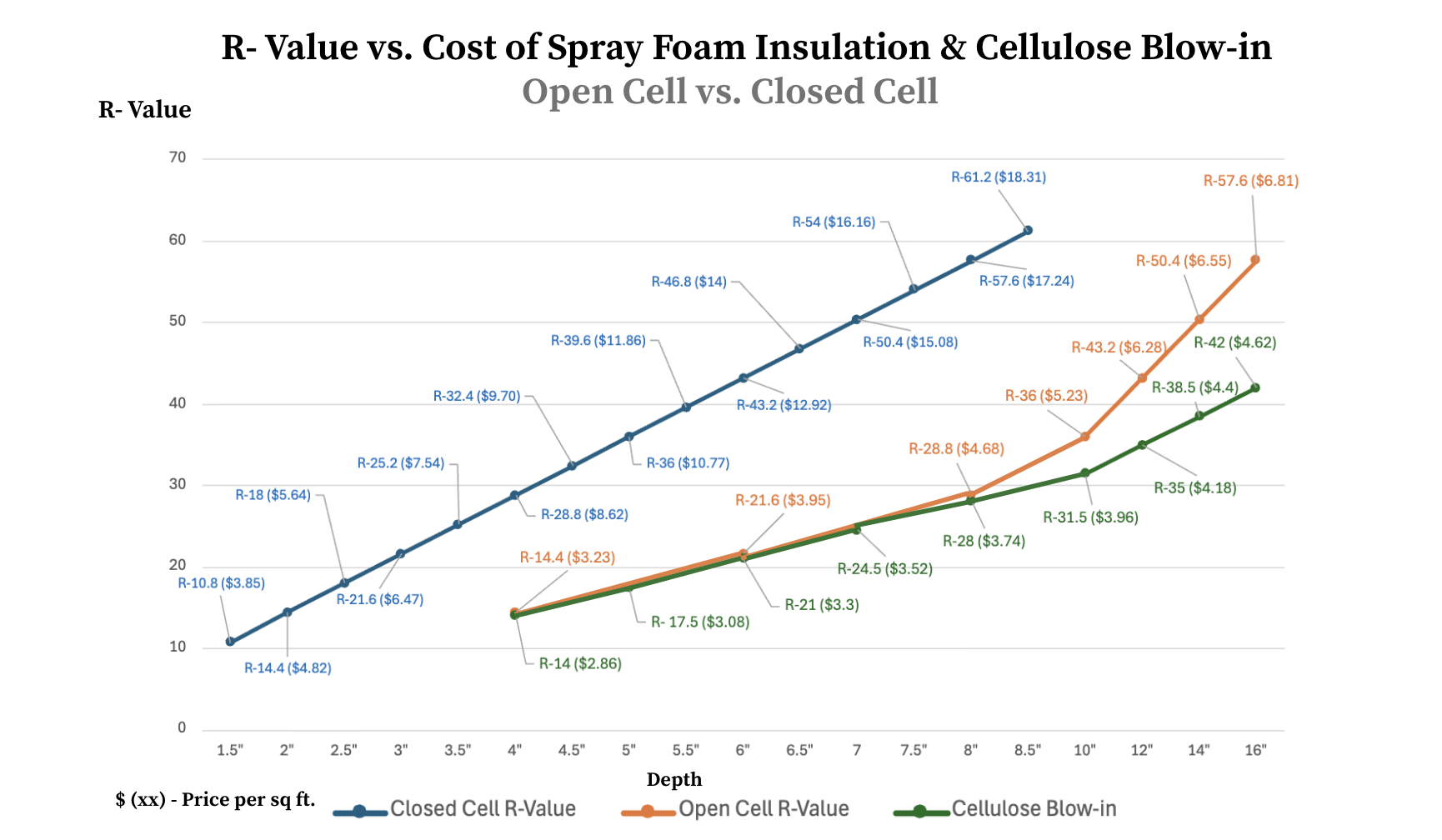
SanPro can position this service around real homeowner problems in Richmond — attic heat gain, under-insulated crawl spaces, aging wall insulation, and insulation replacement after pest or contamination issues. Public SanPro listings also already associate the brand with Richmond-area home services and related problem-solving categories such as rodent removal and insulation installation or upgrade.
If insulation has been affected by pests or attic contamination, homeowners can also explore rodent extermination services.
We evaluate the insulation for visible damage, pest activity, moisture concerns, insulation condition, and entry points.
We walk you through the findings in clear language so you understand what is happening and why.
We recommend the right insulation services based on your home’s needs.
We focus on prevention so the issue does not keep coming back.
Everything you need to know before scheduling your SanPro Attic Services
The best insulation depends on the area of the home and the performance goal. Attics often use blown-in fiberglass or cellulose, walls may use fiberglass batts, mineral wool, or spray foam, and crawl spaces or rim joists often benefit from spray foam or rigid board depending on the assembly. DOE and ENERGY STAR both explain that insulation selection should be based on the application, installation method, and required R-value.
Many retrofit discussions for central Virginia place attic insulation in the R-49 to R-60 range, while walls commonly fall in the R-13 to R-20 range depending on the assembly. ENERGY STAR and Virginia code materials both support this general range in Zone 4 contexts.
Yes. DOE specifically identifies loose-fill materials such as fiberglass, cellulose, and mineral wool as strong options for attic floors and irregular spaces because they can be blown around obstructions and into hard-to-reach areas.
Neither is automatically better in every application. Spray foam can provide insulation plus air sealing and often higher R-value per inch, while fiberglass remains cost-effective and widely used when installed correctly. DOE emphasizes that material choice depends on where the insulation is being installed and how it will be installed.
Often yes, especially in attics, but only if the existing insulation is dry, clean, and in suitable condition. Wet, contaminated, compressed, or pest-damaged insulation may need removal first. ENERGY STAR’s retrofit guidance also assumes that many homes already have some insulation and provides add-on recommendations based on that condition.
Insulation may need replacement when it is wet, moldy, rodent-affected, compressed, contaminated, or no longer performing properly. DOE notes that installation quality and material condition affect real-world performance.
Real reviews from real homeowners across Richmond, VA.
EXCELLENTTrustindex verifies that the original source of the review is Google. I am working with SanPro and hace been pleased with the level of responsiveness. Brad has helped me by explaining details and providing great customer service.Posted on GoogleTrustindex verifies that the original source of the review is Google. I had a great experience with a pest exclusion in my attic. Bradley was so nice and helpful. His communication was superb!Posted on GoogleTrustindex verifies that the original source of the review is Google. Bradley Mack from SanPro LLC is the best inspector there is in the pest industry! He’s given great feedback on some issues I was having with my previous home & I will have him inspect my next home as well. Thank you so much for your great customer service & knowledgeable feedback, look forward to working with you guys!Posted on GoogleTrustindex verifies that the original source of the review is Google. Jeff did great job today at our store even though it was his first time at our location, he was friendly and easy to deal with !Posted on GoogleTrustindex verifies that the original source of the review is Google. Our seller hired Jeff at SanPro to remediate mold found during a home inspection. Jeff was professional, responsive, and followed up after the buyers’ walkthrough to ensure everything went smoothly.Posted on GoogleTrustindex verifies that the original source of the review is Google. Martin came out and assessed my black widow showing up in the spring time. He knew his stuff! Had a good price and bye bye black widow. !Posted on GoogleTrustindex verifies that the original source of the review is Google. Brad came out the very same day I called for a rodent inspection in our crawl space after we started smelling what smelled like a dead rodent. Great guy, showed up on time, very knowledgeable and I will definitely be calling them again for more things we need done on the crawl space.Posted on GoogleTrustindex verifies that the original source of the review is Google. Quick response and discovery of the pest issue in my home. Friendly service and offered a reasonable quote to perform the remediation.Posted on GoogleTrustindex verifies that the original source of the review is Google. Brian- what a great job! Thanks for the inspection.
Homeowners choose SanPro because they want a service they can rely on—every time. With years of experience serving homeowners, our team delivers consistent results through clear communication, responsive scheduling, and solutions designed to last. We focus on doing the job right the first time, addressing root causes instead of temporary fixes, so you can feel confident your home is protected long after the service is complete.
Years of Experience
Homes Protected
Average Response Time
Satisfaction Guarantee
Our team brings experience, precision, and professionalism to every service we provide. Each technician is trained to thoroughly assess your home, clearly explain your options, and deliver solutions with attention to detail. We take pride in doing the work the right way—ensuring every job is completed with care, consistency, and respect for your home.
At SanPro Home Solutions, our licensed and professionally trained technicians deliver expert pest control services with precision, care, and consistency. Every service is backed by industry certifications, proven methods, and a commitment to protecting your home or business the right way.




SanPro proudly serves homeowners throughout Richmond and surrounding communities with solutions tailored to local conditions. From seasonal pest activity to crawlspace moisture challenges and attic insulation needs, we understand what homes in this area require and deliver services designed to perform.
If your home has uneven temperatures, high energy bills, outdated attic insulation, or underperforming crawl-space insulation, SanPro can help. Our team provides professional insulation installation in Richmond VA tailored to your home’s needs — from attic insulation upgrades to spray foam and crawl-space improvements.

