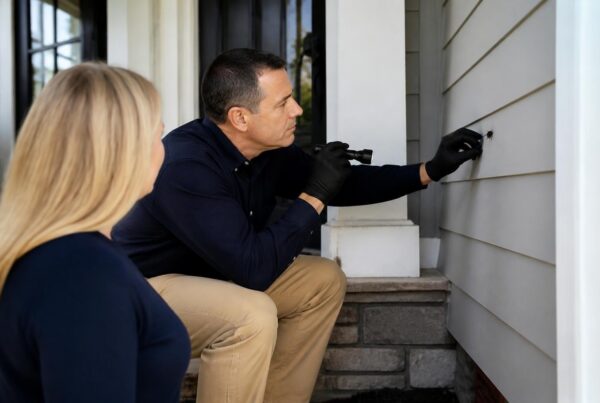
Homeowners across Richmond, VA, face persistent challenges with ant colonies establishing themselves in yards, gardens, patios, and around home foundations. While chemical pesticides offer quick results, many property owners seek safer alternatives that protect children, pets, beneficial insects, and the local ecosystem. Understanding how to deploy a natural ant killer outside effectively requires knowledge of ant biology, strategic application methods, and realistic expectations about what these solutions can and cannot achieve. This comprehensive guide explores proven natural methods that work in outdoor environments while helping you make informed decisions about when professional intervention becomes necessary.
Understanding Outdoor Ant Behavior and Biology
Before selecting any natural ant killer outside, you need to understand why ants colonize your property and how their social structure influences control strategies. Ants establish outdoor colonies because they find adequate food sources, moisture, shelter, and nesting sites. Unlike indoor infestations where ants simply forage, outdoor colonies represent the actual nesting site where queens lay eggs and workers support the entire colony structure.
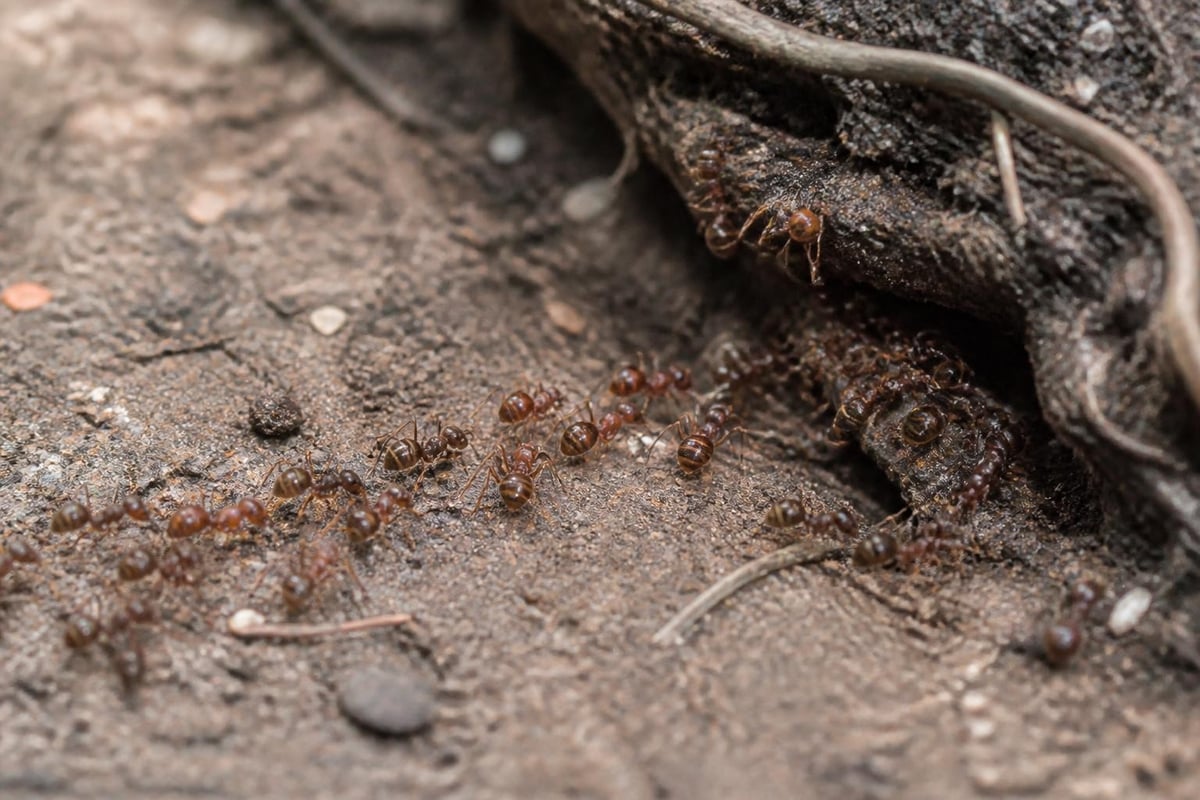
Most outdoor ant species in the Richmond area follow predictable patterns. They build nests in soil, under pavers, along foundations, or within landscape mulch. Worker ants travel established trails between the nest and food sources, leaving pheromone markers for nestmates to follow. This trail-following behavior becomes critical when deploying bait-based natural solutions.
Species-Specific Considerations
Different ant species require different approaches. According to comprehensive research from the University of California IPM program, identifying your ant species determines which natural methods work best:
- Pavement ants nest under stones, concrete slabs, and driveways
- Odorous house ants prefer moist soil near foundations and mulched beds
- Carpenter ants establish satellite colonies in landscape timbers and tree stumps
- Fire ants build distinctive mound nests in open, sunny lawn areas
Each species has unique food preferences, nesting habits, and seasonal activity patterns. Fire ants, for example, respond poorly to repellent-based approaches because disturbing their mounds triggers aggressive defensive behavior and often causes colony relocation rather than elimination.
Physical Barriers and Cultural Controls
The most sustainable approach to using a natural ant killer outside begins with making your property less hospitable to ant colonies. Physical barriers and cultural practices reduce ant populations without introducing any substances into your landscape.
Habitat Modification Strategies
Eliminating conditions that attract and support ant colonies forms the foundation of integrated pest management. Remove what ants need to thrive:
- Clear vegetation touching structures – Maintain a 12-18 inch clearance between shrubs, mulch, and your foundation
- Fix moisture problems – Repair leaking outdoor faucets, downspout issues, and areas with poor drainage
- Remove food sources – Clean up fallen fruit, secure compost bins, and eliminate honeydew-producing aphids on plants
- Reduce nesting sites – Turn mulch regularly, remove landscape debris, and eliminate rotting wood
Gravel barriers work particularly well around home perimeters. Replace organic mulch within 18 inches of your foundation with a 2-3 inch layer of crushed rock or pea gravel. Ants struggle to nest in inorganic materials, and this barrier disrupts their typical foundation-to-structure access routes.
Mechanical Removal Techniques
For small colonies or individual nests discovered early:
| Method | Application | Effectiveness | Limitations |
|---|---|---|---|
| Hot water | Pour 2-3 gallons into nest entrance | High for shallow nests | Won't reach deep colonies; may damage plants |
| Manual excavation | Remove entire nest with shovel | Very high if complete | Labor-intensive; risk of incomplete removal |
| Flooding | Saturate nest area thoroughly | Moderate | Ants often relocate; doesn't kill queen |
Professional pest exterminators in Richmond VA often recommend hot water treatment as a first response to newly discovered nests, particularly in garden beds where you want to avoid chemical residues near edible plants.
Diatomaceous Earth and Mineral-Based Solutions
Diatomaceous earth (DE) represents one of the most widely recommended natural ant killer outside options. This powder consists of fossilized remains of microscopic aquatic organisms called diatoms. Food-grade DE works through mechanical action rather than chemical toxicity.
How Diatomaceous Earth Works
When ants crawl through DE powder, the microscopically sharp edges abrade their exoskeleton's waxy protective coating. This damage causes desiccation (drying out), leading to death through dehydration. The University of Florida IFAS Extension has published research on natural products for managing landscape pests that confirms DE's effectiveness while noting important limitations.
Application guidelines for outdoor use:
- Apply only in dry conditions – moisture renders DE ineffective
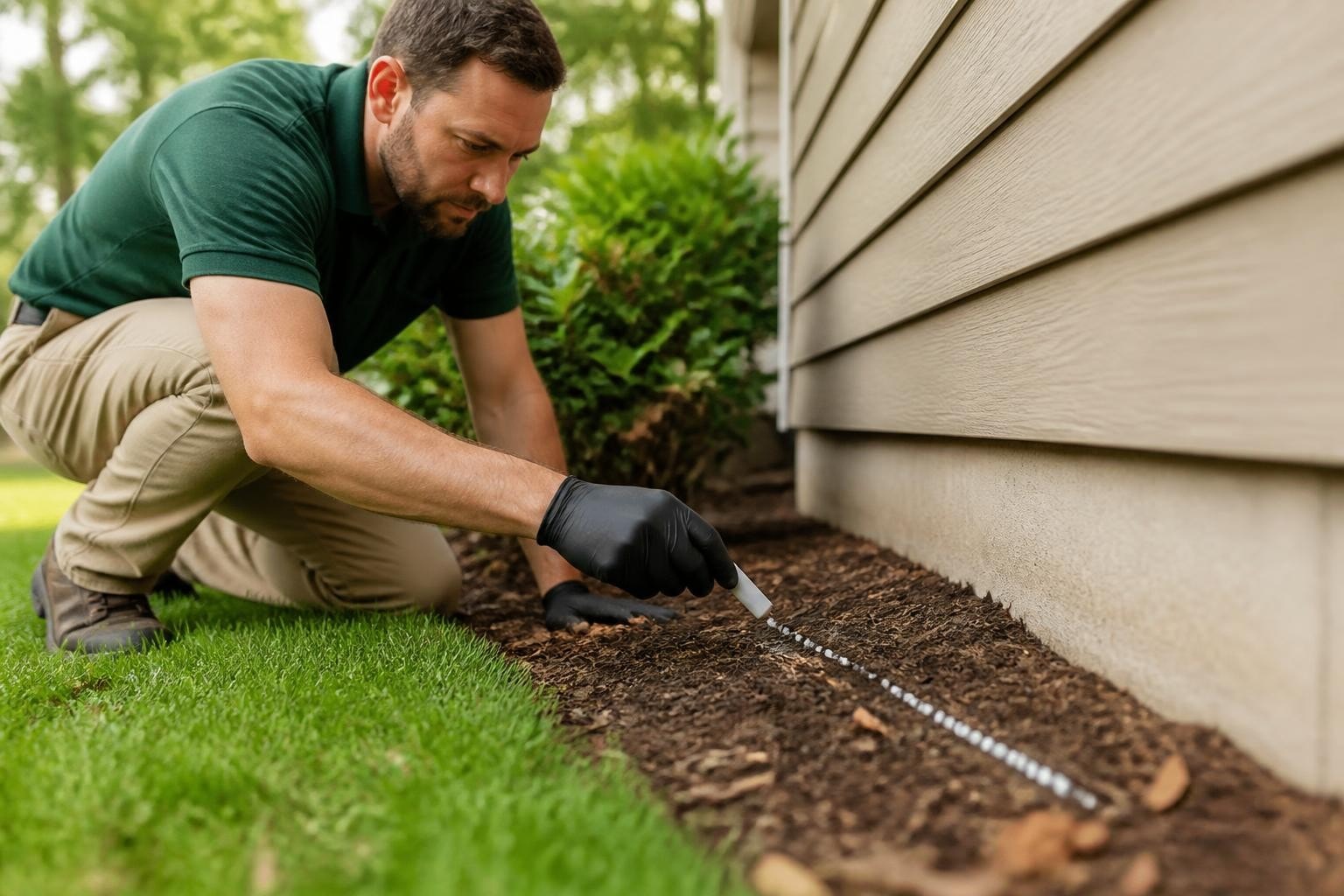
- Create barrier lines 1-2 inches wide and 1/4 inch thick
- Target ant trails, nest entrances, and foundation perimeters
- Reapply after rain, irrigation, or heavy dew
- Use food-grade DE only, never pool-filter grade (which poses respiratory hazards)
DE's biggest drawback outdoors is moisture sensitivity. Richmond's humid climate and frequent summer thunderstorms mean you'll need frequent reapplication. Additionally, DE affects all crawling insects indiscriminately, including beneficial predators like ground beetles that naturally control other pests.
Borax and Boric Acid Minerals
Borax (sodium borate) functions differently than DE. Rather than acting as a physical barrier, borax works as a slow-acting stomach poison when ants consume it. This delayed action allows foraging workers to carry the toxin back to the colony and share it through trophallaxis (food sharing), potentially reaching the queen.
Sugar-borax bait recipe (recommended by Iowa State University Extension):
- Mix 1 cup warm water with 1/2 cup sugar until dissolved
- Add 2 tablespoons borax and stir thoroughly
- Soak cotton balls in solution
- Place in small containers (with holes for ant access) near trails
- Refresh weekly or when dried out
Place borax baits where children and pets cannot access them. While borax has lower toxicity than synthetic pesticides, ingestion by non-target animals remains a concern. Position baits under overturned plant pots with small rocks propping up edges for ant entry, or use commercial bait stations designed for outdoor placement.
Essential Oils and Botanical Repellents
Plant-based essential oils have gained popularity as a natural ant killer outside, though scientific evidence reveals mixed results. Multiple essential oils demonstrate ant repellency in laboratory studies, but field performance in outdoor environments typically disappoints homeowners expecting complete elimination.
Scientifically Tested Essential Oils
Research published in peer-reviewed literature has examined essential oil toxicity and repellency against various ant species:
- Peppermint oil – Strong repellent effect; ants avoid treated areas
- Tea tree oil – Contact toxicity against workers; repels foraging ants
- Cinnamon oil – Disrupts pheromone trails; creates temporary barriers
- Citrus oils (limonene) – Contact kill on workers; breaks down quickly outdoors
- Clove oil (eugenol) – Highest contact toxicity among commonly available oils
Application method for barrier treatment:
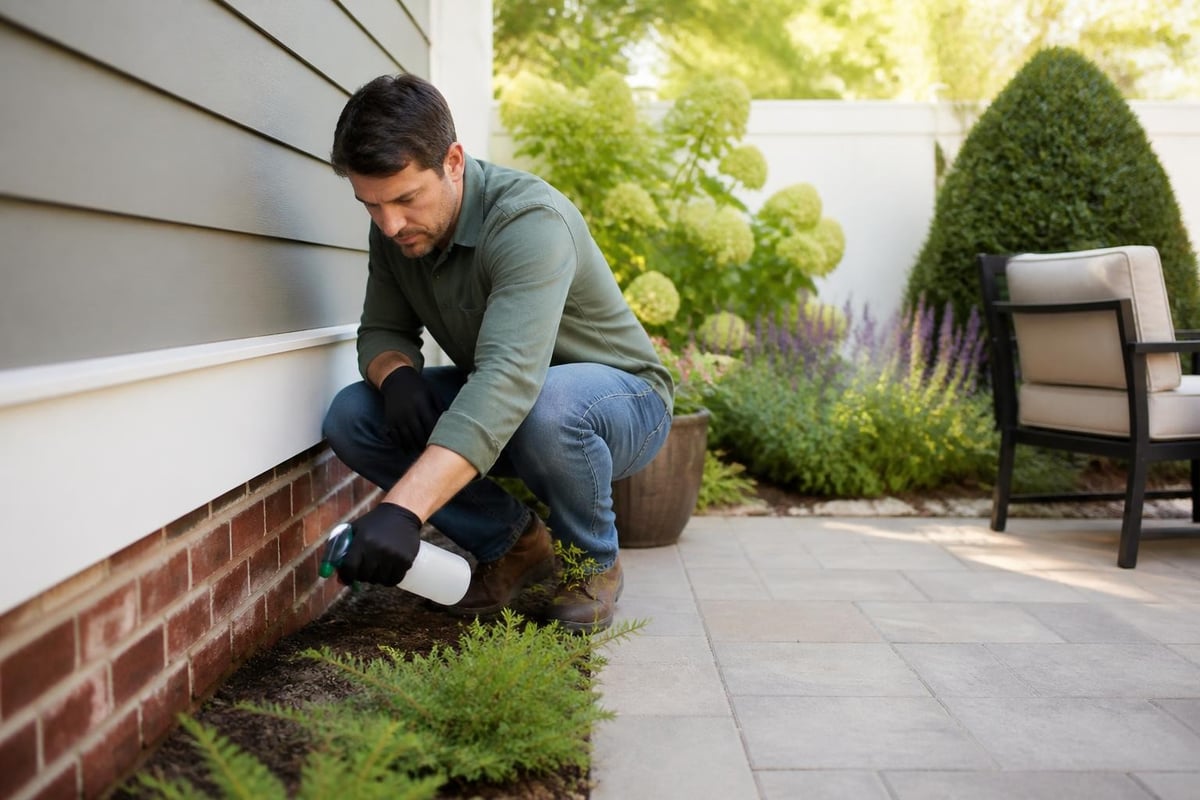
Mix 15-20 drops essential oil per cup of water in a spray bottle. Add a few drops of dish soap as an emulsifier. Spray along ant trails, nest entrances, and foundation lines. Reapply every 2-3 days or after rain.
Realistic Expectations for Botanical Approaches
Essential oils function primarily as repellents rather than true colony eliminators. They push ants away from treated areas but rarely kill entire colonies. This displacement can actually worsen problems when ants relocate to more difficult-to-treat areas like crawl spaces where moisture and shelter create ideal nesting conditions.
The Our Water Our World guidance from municipal agencies and UC Extension emphasizes using botanical repellents as part of integrated approaches rather than standalone solutions. Oils work best for:
- Protecting specific high-value areas (vegetable gardens, children's play zones)
- Creating temporary barriers during outdoor events
- Supporting other control methods in comprehensive strategies
- Deterring ant exploration of new areas
The volatility that makes essential oils fragrant also limits their outdoor persistence. Direct sunlight, heat, and air movement rapidly break down these compounds, requiring constant reapplication that becomes expensive and time-consuming for most homeowners.
Vinegar and Acidic Solutions
White vinegar (5% acetic acid) represents one of the most accessible options when seeking a natural ant killer outside. Like essential oils, vinegar primarily acts as a repellent and trail disruptor rather than a colony killer.
How Vinegar Affects Ants
Vinegar works through multiple mechanisms. The strong odor masks and disrupts pheromone trails that ants use for navigation. Direct contact with concentrated vinegar can kill individual ants by damaging their exoskeletons and disrupting their chemical processes. However, vinegar doesn't provide residual protection once it dries and evaporates.
Vinegar spray formula:
- For trail disruption: Mix equal parts white vinegar and water
- For stronger contact kill: Use undiluted white vinegar (5% acetic acid)
- Enhanced formula: Add 10-15 drops essential oil per cup of vinegar solution
Spray directly on ants, along trails, and around nest entrances. For pavement ant colonies nesting under sidewalks or patios, pour undiluted vinegar directly into visible entrances.
Limitations in Outdoor Environments
Vinegar's effectiveness diminishes rapidly outdoors. Rain, irrigation, and morning dew wash away residues within hours. The acidic pH can also damage or kill sensitive plants when overapplied to garden areas. Vinegar works best for:
- Immediate spot treatment of ant trails on hard surfaces
- Quick response to ants discovered on patios or decks before guests arrive
- Supplementary treatment combined with physical barriers and habitat modification
- Non-toxic option for areas where children and pets play frequently
As a Richmond VA pest exterminator perspective, vinegar serves as a stopgap measure rather than a comprehensive solution. It addresses symptoms (visible worker ants) without impacting the source (the colony and queen).
Beneficial Nematodes and Biological Controls
Biological control introduces living organisms that naturally prey on or parasitize pest species. For outdoor ant management, beneficial nematodes (microscopic roundworms) offer an intriguing natural option that actually attacks colonies below ground.
How Nematode Applications Work
Specific nematode species (primarily Steinernema and Heterorhabditis genera) actively hunt insect larvae and pupae in soil. When nematodes locate ant brood, they enter the host and release symbiotic bacteria that kill the developing ant within 24-48 hours. The nematodes then reproduce inside the host and emerge to seek new prey.
Application process:
- Purchase live nematodes from garden suppliers (refrigerated storage required)
- Mix according to package directions (typically millions of nematodes per gallon of water)
- Apply to moist soil in early morning or evening
- Water immediately before and after application
- Apply when soil temperature is between 55-85°F
Nematodes require specific environmental conditions. Soil must remain consistently moist for nematode survival and movement. They die rapidly in direct sunlight and desiccate in dry soil. Richmond's summer heat can challenge nematode establishment unless you irrigate treated areas regularly.
Effectiveness Against Ant Colonies
Results vary significantly by ant species and environmental conditions:
| Ant Species | Nematode Effectiveness | Notes |
|---|---|---|
| Fire ants | Moderate to Good | Best results against brood in mound periphery |
| Pavement ants | Moderate | Limited access to nests under concrete |
| Carpenter ants | Poor | Colonies often in wood, not soil |
| Odorous house ants | Good | Shallow soil nests provide nematode access |
Nematodes work slowly compared to chemical controls. Expect 3-4 weeks before seeing noticeable colony reduction. For homeowners committed to chemical-free approaches and willing to provide ongoing irrigation, nematodes represent a legitimate natural ant killer outside option with minimal environmental impact.
Combination Strategies for Maximum Effectiveness
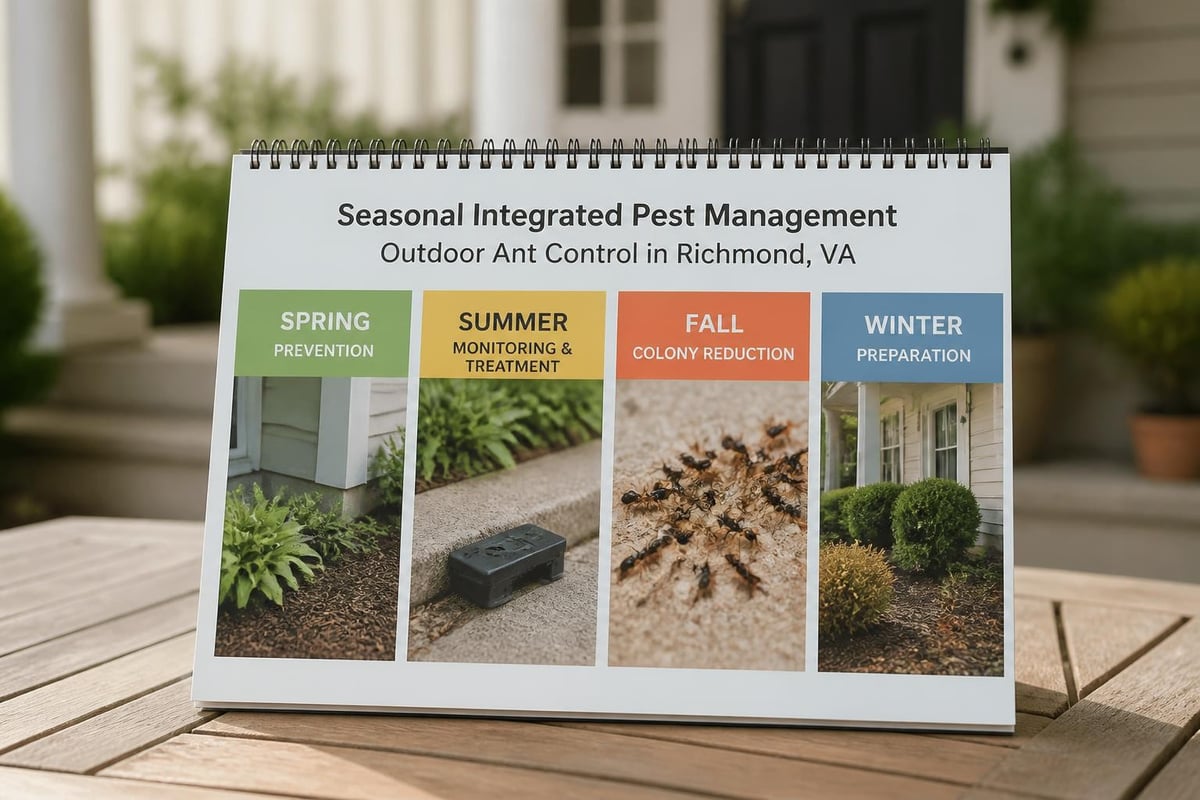
No single natural method reliably eliminates established outdoor ant colonies. The most successful approaches layer multiple techniques based on integrated pest management (IPM) principles. The University of Maine Cooperative Extension recently addressed this reality, noting that effective natural methods require persistence, correct identification, and realistic expectations.
Building a Layered Defense System
Phase 1: Prevention and Exclusion (Ongoing)
- Maintain gravel barriers around foundations
- Eliminate moisture sources and repair drainage issues
- Remove attractive food sources from yard
- Trim vegetation away from structures
- Turn mulch monthly to disrupt nesting
Phase 2: Detection and Monitoring (Weekly)
- Inspect property for new trails and nests
- Identify ant species to determine appropriate methods
- Map colony locations and foraging patterns
- Note areas of repeated activity
Phase 3: Active Treatment (As Needed)
- Apply borax baits near active trails
- Treat nests with hot water or DE
- Use essential oil barriers around sensitive areas
- Deploy nematodes in garden beds with soil nests
- Spray vinegar for immediate trail disruption
Phase 4: Evaluation and Adjustment (Bi-weekly)
- Assess whether ant activity is increasing or decreasing
- Rotate methods to prevent ant adaptation
- Identify failures and adjust approach
- Document what works for your specific situation
When to Escalate to Professional Intervention
Natural methods work best for minor ant problems, species with shallow soil nests, and homeowners willing to invest significant time in monitoring and reapplication. Situations that typically exceed natural ant killer outside capabilities include:
- Large established fire ant colonies with aggressive defensive behavior
- Carpenter ant infestations threatening structural wood in homes or landscape features
- Multiple colonies across extensive property areas
- Persistent problems unresponsive to 4-6 weeks of consistent natural treatments
- Sensitive areas where structural damage risk outweighs chemical-free preferences
Professional pest control services combine synthetic products with IPM strategies that address both immediate symptoms and long-term prevention. Licensed exterminators access professional-grade baits, targeted application equipment, and expertise in species-specific biology that dramatically improve success rates.
Seasonal Considerations for Richmond VA Properties
Central Virginia's climate creates distinct seasonal patterns in ant activity that influence natural control strategies. Understanding these cycles helps you time interventions for maximum effectiveness and prevents wasted effort during low-activity periods.
Spring (March-May)
Ant behavior: Colonies emerge from winter dormancy. Queens increase egg laying. Workers begin intensive foraging. This represents the critical window for preventing summer population explosions.
Natural control priorities:
- Apply preventative borax baits before colonies expand
- Create or refresh physical barriers (gravel, DE lines)
- Treat newly discovered nests while populations remain small
- Eliminate early-season food sources (aphid colonies, fallen fruit)
Summer (June-August)
Ant behavior: Peak colony size and foraging activity. Multiple satellite nests may develop. Hot, dry periods drive ants toward structures seeking moisture. According to Richmond pest management professionals, this season generates the most homeowner complaints.
Natural control priorities:
- Maintain consistent moisture in areas treated with nematodes
- Increase reapplication frequency of oils and DE (heat and rain accelerate breakdown)
- Focus on moisture elimination around foundations
- Monitor for signs of indoor invasion (cockroach activity often increases concurrently)
Fall (September-November)
Ant behavior: Colonies prepare for winter. Queens stop laying eggs. Workers focus on gathering protein and fat for winter survival. Ant activity decreases as temperatures drop.
Natural control priorities:
- Target colonies for maximum impact before they overwinter
- Apply hot water or mechanical removal to discovered nests
- Use fall as planning season to address habitat issues before next spring
- Seal exterior cracks and gaps before ants seek overwintering sites indoors
Winter (December-February)
Ant behavior: Most species enter dormancy in soil or protected cavities. Little to no exterior activity in Richmond's typically mild but occasionally freezing winters.
Natural control priorities:
- Plan next year's strategy based on previous year's problem areas
- Complete habitat modification projects (drainage, gravel barriers, vegetation management)
- Stock supplies for spring intervention
- Address structural issues that ants might exploit when activity resumes
Evaluating Natural Product Claims and Marketing
The market for "natural" and "organic" pest control products has exploded, but not all products deliver on their promises. Homeowners seeking a natural ant killer outside must navigate misleading marketing, unsubstantiated claims, and products that trade effectiveness for "green" credentials.
What "Natural" Actually Means
No regulatory body strictly defines "natural" for pest control products. Companies exploit this ambiguity:
Legitimate natural products:
- Derived from plant, mineral, or biological sources
- Minimal synthetic processing
- Lower environmental persistence than synthetic pesticides
- Examples: neem oil, pyrethrin (from chrysanthemums), diatomaceous earth, borax
Questionable "natural" claims:
- Products containing synthetic derivatives of natural compounds
- Heavily processed substances chemically similar to natural originals
- "Plant-based" products with undisclosed synthetic additives
- Formulations relying on proprietary blends without disclosed active ingredients
Red Flags in Product Marketing
Be skeptical of products claiming:
- "Kills ants instantly and permanently" – Natural products rarely provide instant permanent control
- "Completely safe for all pets and wildlife" – Even natural products can harm non-target species
- "Works on all ant species" – Effective control requires species-specific approaches
- "One application eliminates entire colonies" – Colony elimination requires targeting queens, which surface products rarely reach
- "No reapplication needed" – Natural products break down faster than synthetics, requiring frequent renewal
Reading Labels and Active Ingredients
Federal law requires pest control products to list active ingredients and EPA registration numbers (even natural products making pest control claims must register). Look for:
- Clear active ingredient disclosure – Avoid products listing only "proprietary blend"
- Concentration percentages – Higher concentrations typically indicate commercial-grade products
- Specific use instructions – Vague directions suggest untested formulations
- Precautionary statements – Even natural products should list appropriate safety information
- EPA registration numbers – Indicates the product has undergone federal review
Products containing essential oils at concentrations below 25% often function more as repellents than insecticides. For actual ant elimination, look for products containing boric acid, borax, diatomaceous earth, or spinosad (a bacterial fermentation product) at labeled concentrations.
Long-Term Property Management and Prevention
The most effective natural ant killer outside is preventing colonies from establishing in the first place. Long-term prevention requires viewing your property through the lens of ant ecology and systematically eliminating the resources they need.
Creating Ant-Resistant Landscapes
Foundation zone management:
Treat the 3-foot perimeter around your home's foundation as a defensive barrier. This critical zone should be:
- Free of organic mulch (use rock, rubber mulch, or bare soil)
- Cleared of vegetation (no shrubs, groundcovers, or overhanging branches)
- Graded to direct water away from the foundation
- Inspected monthly for new ant trails or nests
Lawn and garden strategies:
- Select plants that don't attract aphids and other honeydew-producing insects
- Avoid dense groundcovers near structures (they create protected ant highways)
- Maintain healthy turf to outcompete ant-friendly weeds
- Compost bins should be at least 50 feet from structures with tight-fitting lids
Hardscape considerations:
- Install pavers on compacted gravel bases rather than sand
- Seal gaps in sidewalk and patio expansion joints
- Ensure proper drainage prevents water pooling under concrete
- Use polymeric sand in paver joints (it hardens and resists ant excavation)
Monitoring Programs
Establish a monthly inspection routine:
- Walk your property's perimeter looking for trails along foundations
- Check under decorative items (pots, stepping stones, landscape timbers)
- Inspect mulched beds for nest craters or disturbed areas
- Monitor trees for carpenter ant activity (sawdust piles at base)
- Document findings in a simple log to track patterns over time
Early detection allows you to deploy a natural ant killer outside when colonies are small and vulnerable. A small nest discovered in April requires minimal intervention. That same colony in August may house 50,000 workers and require professional treatment.
Integrating Professional Expertise
Even homeowners committed to natural methods benefit from professional consultation. Richmond VA pest exterminators can:
- Accurately identify species – Critical for choosing effective methods
- Locate primary nests – Finding the queen determines success or failure
- Assess structural risks – Some ant species indicate underlying moisture or wood decay issues
- Recommend targeted approaches – Professional experience reveals what actually works versus marketing hype
- Monitor effectiveness – Objective evaluation of whether your approach is succeeding
Many pest control companies now offer IPM-focused services that prioritize non-chemical methods while keeping conventional treatments available for situations exceeding natural control capabilities. This hybrid approach respects environmental preferences while ensuring your property remains protected.
Understanding Limitations and Managing Expectations
Honesty about what natural methods can and cannot achieve prevents frustration and helps homeowners make informed decisions. A natural ant killer outside will never match the speed, convenience, or colony-elimination rates of professional-grade synthetic insecticides.
Realistic Timelines for Natural Control
What to expect:
| Timeline | Natural Methods | Professional Chemical Treatment |
|---|---|---|
| 24 hours | Individual worker kills (oils, vinegar) | Significant forager reduction |
| 1 week | Trail disruption, visible activity decrease | 70-90% colony reduction |
| 2-4 weeks | Noticeable population decline (if methods target colony) | Complete elimination typical |
| 6-8 weeks | Possible colony elimination (small colonies only) | Residual protection preventing recolonization |
Natural approaches work through attrition rather than rapid elimination. You're managing populations rather than eradicating them completely. For many homeowners, reducing ant presence to tolerable levels satisfies their needs without requiring zero-ant absolutes.
Situations Where Natural Methods Consistently Underperform
Be prepared to escalate to professional help when:
- Carpenter ants are active (structural damage risk)
- Fire ant colonies threaten children's play areas (medical risk from stings)
- Ants repeatedly enter your home despite outdoor treatments
- Colony size exceeds what natural methods can reasonably impact
- Time investment for constant reapplication becomes unsustainable
- Natural method costs exceed professional service pricing
The goal isn't perfection but rather matching your approach to your specific situation, risk tolerance, and environmental values. Sometimes a targeted professional treatment followed by natural maintenance provides the best balance.
Effective outdoor ant management in Richmond VA requires understanding ant biology, deploying multiple control methods strategically, and maintaining realistic expectations about natural product performance. While a natural ant killer outside may not provide the rapid results of synthetic pesticides, layered approaches combining habitat modification, physical barriers, botanical repellents, and mineral-based solutions can successfully reduce ant populations for homeowners committed to environmentally conscious practices. When natural methods prove insufficient or structural risks emerge, SanPro offers professional pest control services throughout Richmond that combine IPM principles with proven elimination strategies, ensuring your property remains protected while respecting your preferences for responsible pest management.