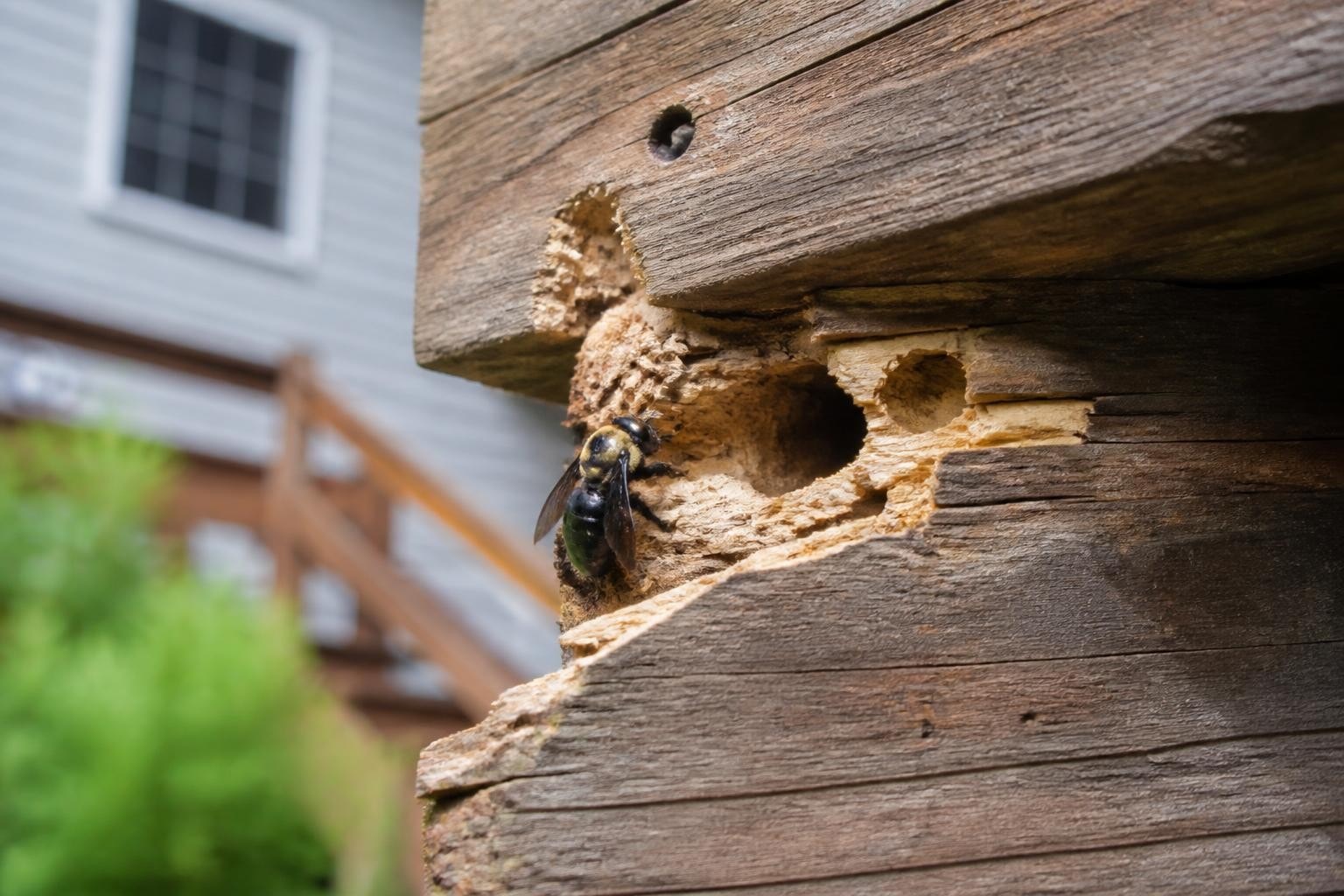
Carpenter bees represent a unique challenge for Richmond VA homeowners who notice large, hovering bees near their decks, eaves, and siding each spring. Unlike termites that consume wood, these solitary pollinators excavate perfectly round tunnels to nest and raise their young, leaving behind structural damage that compounds year after year. Understanding effective carpenter bee treatment starts with recognizing the signs, knowing when to act, and choosing the right approach for your property's specific needs. This comprehensive guide walks through everything Richmond homeowners need to know about protecting their investment from these wood-boring insects.
Understanding Carpenter Bee Behavior and Damage
Carpenter bees emerge in Richmond during April and May, when mating season begins and females search for suitable nesting sites. These robust pollinators measure approximately one inch in length and often get mistaken for bumblebees, though carpenter bees display a shiny, hairless black abdomen while bumblebees sport fuzzy, yellow-striped bodies.
The damage begins when female carpenter bees bore into unpainted or weathered softwood. They create entrance holes roughly half an inch in diameter, then turn perpendicular to excavate tunnels that can extend 10 feet or more over multiple seasons. University of Maryland Extension research shows that carpenter bees often return to the same galleries year after year, expanding existing tunnels rather than starting fresh.
Key Signs of Carpenter Bee Activity
Property owners should watch for several telltale indicators:
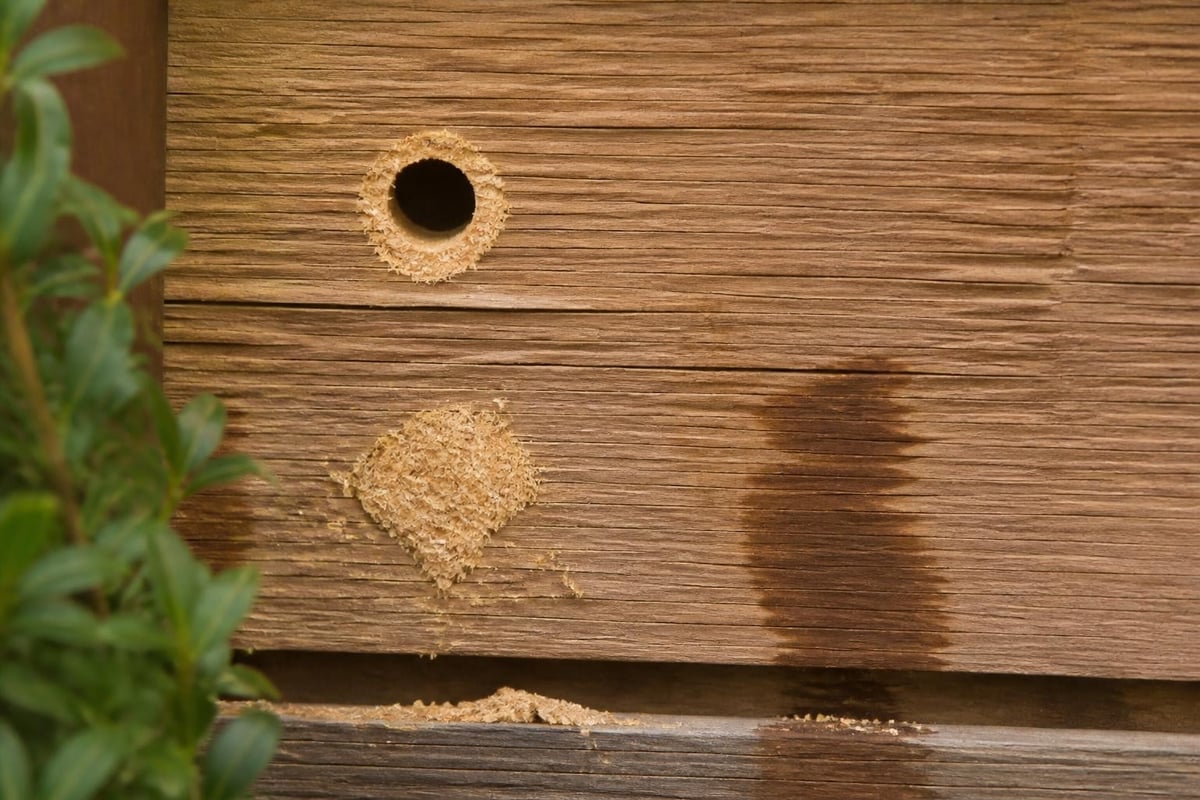
- Perfectly round entrance holes in fascia boards, deck railings, window trim, or siding
- Coarse sawdust (frass) beneath holes and on surfaces below
- Yellow staining around entrance holes from excrement
- Loud buzzing and hovering behavior near wooden structures
- Visible bore dust accumulating during spring months
Male carpenter bees establish territories near active nests and display aggressive hovering behavior toward people and other insects. Despite their intimidating presence, males lack stingers and pose no physical threat. Females possess stingers but rarely use them unless directly handled.
Timing Your Carpenter Bee Treatment
Success with carpenter bee treatment depends heavily on targeting the right life-cycle stage. Penn State Extension guidance emphasizes treating during late summer or early fall when adult bees occupy galleries but before they hibernate for winter. This timing ensures maximum contact with active bees while allowing time to seal entrances before the next generation emerges.
Spring treatment (April-May) addresses actively nesting females but requires careful timing. Treating too early misses bees that haven't yet emerged, while waiting too long allows egg-laying to progress. Early spring also coincides with peak pollinator activity across Richmond gardens, making selective treatment critical.
Summer treatment (July-August) targets developing larvae and newly emerged adults. Young bees often remain in galleries during mid to late summer, creating an ideal window for residual insecticide applications. This period also allows homeowners to complete repairs before fall weather arrives.
Fall preparation (September-October) focuses on sealing treated galleries and applying preventive barriers. Carpenter bees overwinter as adults inside their tunnels, making fall the optimal season for exclusion work. Proper sealing during this window prevents next spring's emergence and forces survivors to seek new nesting sites elsewhere.
| Season | Treatment Goal | Primary Method | Success Rate |
|---|---|---|---|
| Spring | Active nesting females | Dust insecticides | 70-80% |
| Summer | Larvae and new adults | Residual sprays | 85-90% |
| Fall | Overwintering adults + sealing | Combined treatment | 90-95% |
Professional vs. DIY Treatment Options
Homeowners weighing carpenter bee treatment approaches need to consider infestation severity, structure accessibility, and long-term prevention goals. Minor problems involving one or two visible holes often respond well to focused DIY efforts, while extensive tunnel networks or high locations typically require professional expertise.
DIY Carpenter Bee Treatment Methods
Retail products offer several active ingredients labeled for carpenter bee control:
Insecticidal dusts containing deltamethrin or boric acid provide the longest residual activity inside galleries. Application involves puffing dust directly into entrance holes using a hand duster, ensuring the product coats tunnel walls. Carpenter bees contact the dust as they move through galleries, picking up lethal doses on their bodies. Dusts remain effective for months when protected from moisture.
Aerosol sprays deliver quick knockdown of visible bees and provide short-term residual protection. Products with pyrethroid active ingredients (permethrin, bifenthrin) work well for treating entrance holes and adjacent wood surfaces. University of Illinois Extension recommends applying aerosols during evening hours when bees return to galleries for the night.
Foaming formulations expand inside tunnels to achieve deeper penetration than liquids alone. The foam carries insecticide throughout the gallery network while indicating which holes have been treated. This visual confirmation helps ensure complete coverage during multi-hole treatments.
Richmond homeowners attempting DIY carpenter bee treatment should follow all label directions carefully and wear appropriate protective equipment. Safety glasses, gloves, and long sleeves protect against both chemical exposure and defensive stings from female bees.
When Professional Treatment Makes Sense
Certain situations warrant calling pest control experts in Richmond VA:
- Infestations involving 10 or more active galleries
- Damage occurring above first-story access requiring ladders or lifts
- Structural members showing significant tunnel damage
- Repeated failures of previous DIY treatment attempts
- Homes with extensive cedar or redwood trim attractive to carpenter bees
- Properties requiring integrated pest management balancing pollinator protection
Professional pest control services in Richmond VA bring specialized equipment, commercial-grade products, and experience identifying the full scope of infestations. Technicians can access difficult locations safely and apply treatments precisely to minimize non-target impacts. SanPro’s pest control services include comprehensive carpenter bee treatment programs that combine immediate knockdown with long-term prevention strategies tailored to Richmond's climate and common construction materials.
Treatment Application Best Practices
Effective carpenter bee treatment requires more than simply applying insecticide into visible holes. Proper technique ensures product reaches target insects while minimizing waste and environmental impact.
Gallery Treatment Protocol
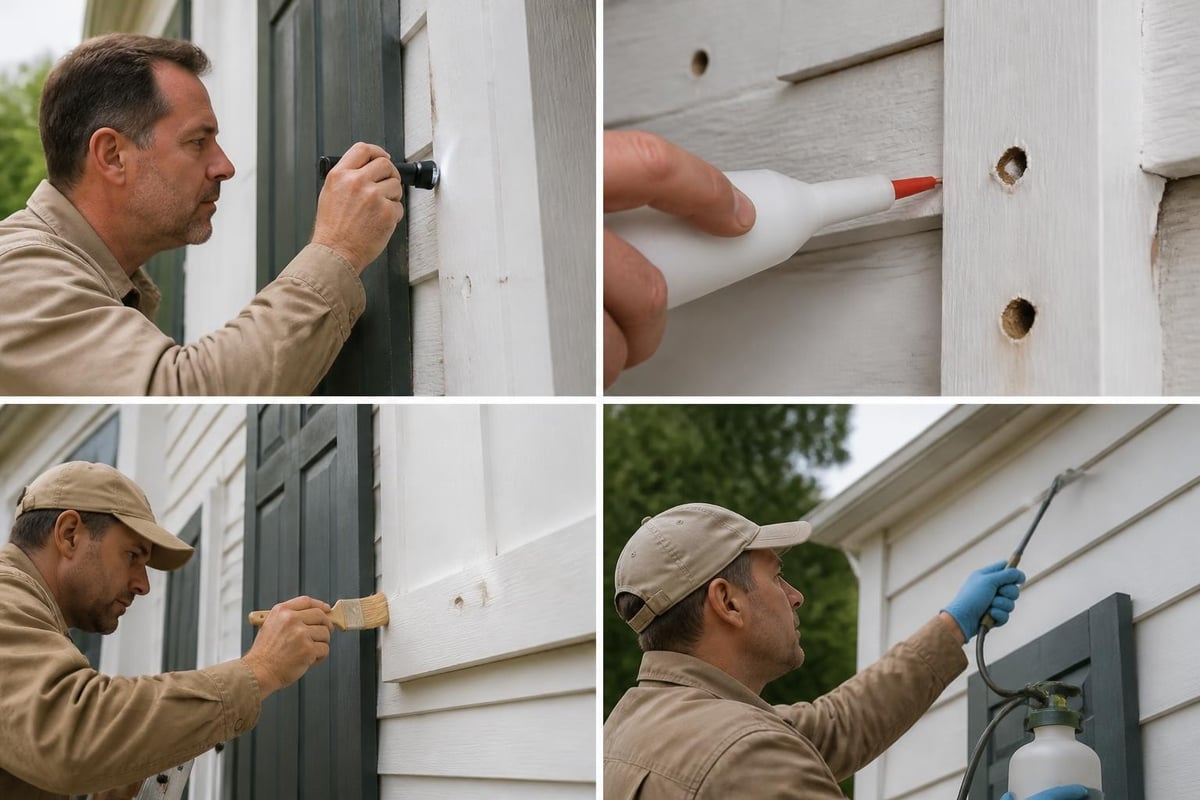
Begin by mapping all visible entrance holes during daylight hours. Use marking tape or chalk to identify each location, noting hole size and evidence of current activity (fresh sawdust, bee traffic). This systematic approach prevents missing galleries during treatment.
Step 1: Select the appropriate insecticide formulation based on hole location and accessibility. Dust works best for horizontal tunnels, while foam excels in vertical or overhead applications.
Step 2: Apply treatment during late evening hours (after 9 PM in Richmond during summer) when carpenter bees have returned to galleries. This timing maximizes contact with adult bees while reducing exposure to beneficial daytime pollinators.
Step 3: Insert the application tip directly into each entrance hole. For dusts, deliver 3-5 puffs to coat tunnel walls. For aerosols, spray for 3-5 seconds. UC IPM guidelines recommend thorough but not excessive application to avoid product runoff.
Step 4: Leave holes unsealed for 48-72 hours after treatment. This waiting period allows bees to contact insecticide and carry it deeper into galleries before they die. Premature sealing can trap live bees that then excavate new exit holes.
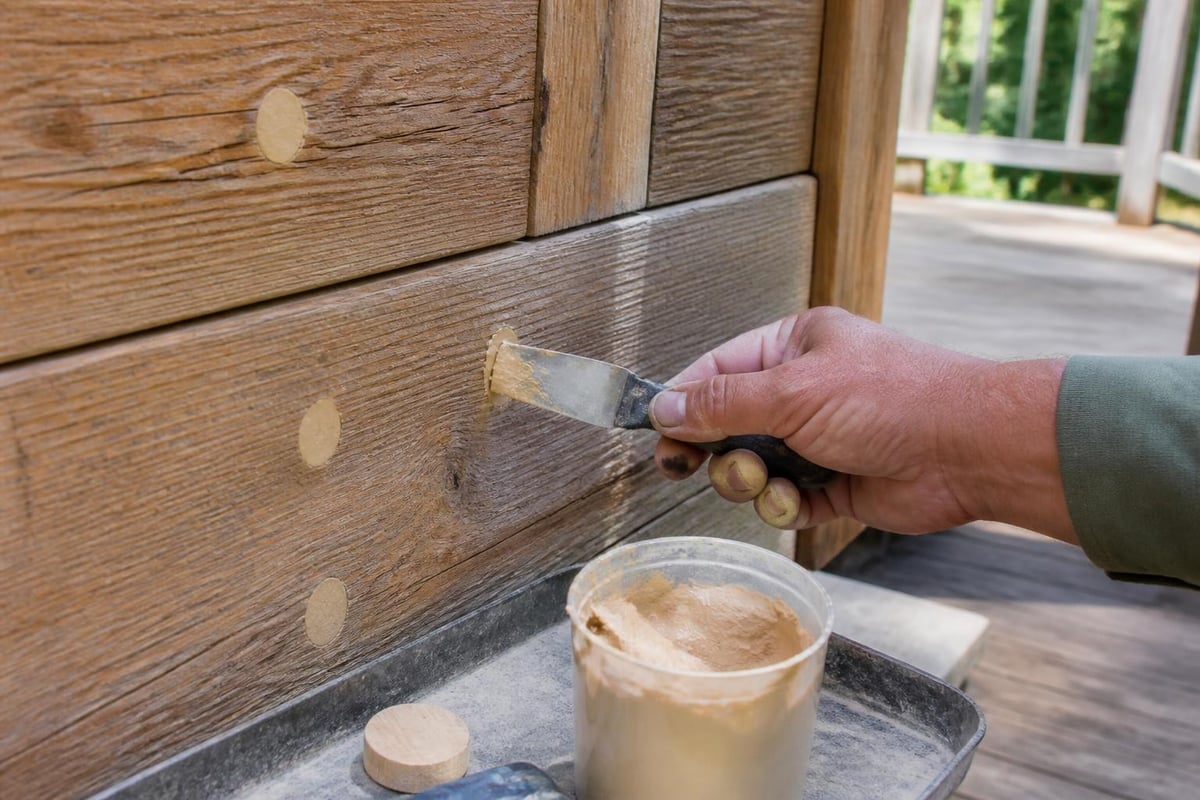
Step 5: Plug treated holes using appropriate materials. Wood putty, caulk, or wooden dowels coated with wood glue all work effectively. Match filler color to existing wood for aesthetic purposes.
Surface Preventive Treatments
Beyond treating active galleries, applying residual barrier sprays to susceptible wood surfaces discourages new nesting attempts. Focus treatments on:
- Unpainted wood trim, fascia, and corner boards
- Deck railings and support posts
- Window and door frames with exposed wood
- Soffits and eaves showing weathering or previous damage
Permethrin and cypermethrin formulations provide 30-60 days of residual activity when applied to dry wood surfaces. Reapplication every 4-6 weeks during peak season (April through July in Richmond) maintains protection throughout nesting season.
Non-Chemical Alternatives and Prevention
Homeowners concerned about pesticide use near pollinator habitat can implement several effective non-chemical strategies for carpenter bee treatment and prevention. The Xerces Society emphasizes that cultural and mechanical controls often succeed when applied consistently as part of an integrated approach.
Physical Barriers and Deterrents
Paint and stain application represents the single most effective long-term prevention method. Carpenter bees strongly prefer bare, unpainted softwood for nesting. Two coats of quality exterior paint or solid-color stain dramatically reduces attack rates. Richmond's climate demands repainting every 5-7 years to maintain protection as weathering exposes bare wood.
Hardwood substitution eliminates carpenter bee attraction in new construction or renovation projects. Replacing pine, fir, and cedar trim with pressure-treated lumber, composite materials, or hardwoods like oak and maple removes preferred nesting substrate. While more expensive initially, these materials deliver permanent resistance to carpenter bee damage.
Metal and vinyl wrapping covers existing wood members vulnerable to attack. Aluminum fascia, vinyl corner trim, and metal drip edges prevent bee access while requiring minimal maintenance. This approach works particularly well for high locations where regular painting proves difficult.
Trap Deployment
Commercial carpenter bee traps mimic nesting sites to capture adult bees without chemicals. These devices feature angled wooden blocks with pre-drilled holes leading to collection jars. Bees enter seeking nesting sites, then instinctively fly upward toward light, becoming trapped in the jar below.
Trap effectiveness varies based on placement and density. Position traps within 15 feet of active galleries at the same height as damage. Plan for one trap per 50 linear feet of susceptible wood during peak season. Iowa State Extension notes that traps work best as supplemental control rather than standalone solutions for established infestations.
Empty trapped bees weekly and relocate them at least two miles from your property. Male carpenter bees caught in traps can be released immediately since they don't excavate tunnels.
Repair and Restoration After Treatment
Successfully treating carpenter bees represents only half the solution. Damaged wood requires proper repair to restore structural integrity and prevent future infestations from exploiting existing galleries.
Assessing Structural Damage
Minor infestations typically produce cosmetic damage requiring simple filling. Serious problems develop when multiple generations expand the same tunnel network over several years, creating extensive galleries that weaken structural members.
Probe suspect wood using a screwdriver or awl to detect hollow areas extending beyond visible entrance holes. Cornell Cooperative Extension guidelines recommend replacing any structural component where tunnels compromise more than 30% of the cross-section.
Signs requiring professional assessment:
- Sagging or movement in deck railings, joists, or beams
- Multiple interconnected galleries visible in a single member
- Woodpecker damage indicating substantial tunnel networks attractive to birds
- Soft spots or crumbling when probed with a tool
- Water infiltration through carpenter bee holes leading to rot
Richmond's humid summers accelerate wood decay once carpenter bee tunnels breach weather barriers. Moisture entering galleries promotes fungal growth and attracts secondary wood-boring insects, compounding the original damage.
Proper Repair Techniques
For minor damage involving isolated holes:
Materials needed: Wood filler or epoxy putty, caulk gun, dowel rods (same diameter as holes), wood glue, sandpaper, primer, and exterior paint matching existing surfaces.
Process: Clean debris from holes using a wire brush or compressed air. For shallow tunnels (under 2 inches), fill completely with exterior-grade wood filler. Deep galleries require dowel plugs cut 1/4 inch proud of the surface, glued in place, then trimmed flush after adhesive cures. Sand repairs smooth, apply oil-based primer to seal wood, and finish with two coats of exterior paint.
For extensive damage requiring member replacement, consult qualified contractors familiar with Richmond building codes. Properly sized replacement lumber must match or exceed the load-bearing capacity of damaged components.
Integrated Management for Richmond Properties
Richmond homeowners benefit from combining multiple carpenter bee treatment strategies into year-round integrated pest management programs. This holistic approach addresses current infestations while preventing future problems through habitat modification and regular monitoring.
Spring Inspection and Treatment
March-April: Conduct thorough property inspections before carpenter bee emergence. Check previous damage sites and any bare wood surfaces. Apply preventive barrier sprays to unpainted trim, particularly south and west-facing exposures receiving maximum sun. Schedule painting projects to complete before late April when females begin nesting site selection.
May-June: Monitor for new boring activity. Treat active galleries weekly using dust formulations during evening hours. Deploy carpenter bee traps near vulnerable structures. Document new damage locations for fall sealing projects.
Summer Maintenance
July-August: Continue weekly monitoring. Treat any new holes discovered. Begin planning repair projects and gathering materials. Apply second application of residual barrier sprays to high-activity areas. Consider consulting pest control professionals for properties showing expanding infestations despite DIY efforts.
Fall Prevention and Sealing
September-October: Execute final treatment applications targeting overwintering adults. Allow 3-4 days for product contact, then seal all treated galleries. Complete scheduled repairs and painting projects before temperatures drop. Remove carpenter bee traps and store for next season.
This seasonal rhythm aligns carpenter bee treatment with the insects' biology while spreading workload across manageable timeframes. Richmond's mild falls often extend working weather into November, providing ample opportunity for exterior projects.
Professional Partnership Benefits
Many Richmond property owners find that establishing relationships with experienced pest control providers delivers better long-term results than purely DIY approaches. Professional services include:
- Comprehensive inspections identifying damage invisible from ground level
- Customized treatment plans addressing property-specific risk factors
- Commercial products unavailable to consumers
- Safety equipment for accessing high locations
- Warranty coverage guaranteeing results
- Seasonal maintenance programs preventing re-infestation
Exploring professional pest control options makes particular sense for homeowners managing multiple properties, those with physical limitations preventing ladder work, or anyone who has struggled with recurring carpenter bee problems despite repeated treatment attempts.
Balancing Carpenter Bee Control with Pollinator Conservation
Responsible carpenter bee treatment acknowledges these insects' ecological importance while protecting property from damage. Female carpenter bees rank among the most efficient pollinators of tomatoes, eggplants, and blueberries, using specialized buzz pollination techniques that dislodge pollen more effectively than honeybees.
Selective Treatment Approaches
Target treatments exclusively to structural wood while preserving carpenter bee populations in surrounding habitat. Dead trees, fallen logs, and brush piles provide abundant natural nesting sites that satisfy carpenter bees' reproductive needs without threatening buildings.
Create designated bee habitat zones at least 50 feet from structures. Leave standing dead trees (snags) or install untreated wood posts specifically for carpenter bee nesting. These "bee hotels" concentrate nesting activity away from your home while supporting local pollinator populations.
Minimizing Collateral Impact
Time treatments to avoid peak pollinator foraging hours. Evening applications (after 8 PM) prevent contact with bees actively visiting flowers. Never spray insecticides directly on blooming plants or flowering weeds near treatment areas.
Select products with low toxicity to beneficial insects. EPA-registered labels specify approved application methods and restricted-use requirements. Dust formulations applied into carpenter bee galleries minimize environmental exposure compared to broadcast sprays covering large surface areas.
Consider trap-based control for properties adjacent to pollinator gardens or native meadows. While slower than chemical treatment, trapping eliminates target insects without residues that might affect honeybees, native bees, or other beneficial species sharing the habitat.
Special Considerations for Richmond Homeowners
Richmond's climate and building traditions create specific carpenter bee treatment challenges requiring localized knowledge. The region's historic homes often feature extensive wood trim, unpainted soffit panels, and cedar shake details particularly vulnerable to carpenter bee attack.
Climate Factors
Richmond's humid subtropical climate extends carpenter bee activity compared to northern regions. Mild winters allow some adults to remain semi-active during warm spells, potentially producing limited late-season boring. This extended season demands vigilance from March through October rather than the shorter April-July window typical in colder climates.
High summer humidity affects treatment product performance. Moisture can degrade dust formulations, reducing residual effectiveness. Store insecticide products in climate-controlled spaces and monitor treated holes for caking or clumping that indicates moisture intrusion.
Common Local Construction Vulnerabilities
Historic cedar siding: Many Richmond-area homes built before 1960 feature cedar clapboard siding. While beautiful and durable, unpainted or weathered cedar ranks among carpenter bees' preferred nesting materials. Properties with original cedar require annual inspection and proactive treatment during high-risk years.
Pressure-treated deck failures: Decks constructed 15-20 years ago using CCA-treated lumber now show preservative leaching, making previously resistant wood vulnerable. Rails, balusters, and fascia boards lose protection first, creating entry points for carpenter bees.
Composite material limitations: While marketed as maintenance-free, composite decking and trim can develop carpenter bee damage when insects bore through outer shells seeking wood fiber cores. Inspect composite materials for holes just as vigilantly as solid wood.
| Material Type | Carpenter Bee Risk | Treatment Priority | Prevention Method |
|---|---|---|---|
| Unpainted softwood | Very High | Immediate | Paint/stain + barriers |
| Weathered cedar | High | High | Surface treatment + sealing |
| Painted trim (good condition) | Low | Monitor | Maintain paint integrity |
| Hardwood (oak, maple) | Very Low | None needed | None required |
| Pressure-treated (new) | Low | Monitor | Inspect annually |
| Vinyl/aluminum | None | None needed | None required |
Long-Term Prevention Strategies
Sustainable carpenter bee treatment extends beyond responding to active infestations. Properties implementing comprehensive prevention programs dramatically reduce future damage while minimizing ongoing treatment requirements.
Maintenance Scheduling
Develop written maintenance calendars tracking painting cycles, inspection dates, and treatment history. Document problem areas, products used, and results achieved. This historical record identifies patterns and guides future prevention efforts.
Recommended maintenance intervals:
- Paint inspection: Annual review of all exterior wood trim
- Touch-up painting: Every 2-3 years for weather-exposed surfaces
- Complete repainting: Every 5-7 years for trim, 7-10 years for siding
- Caulk replacement: Every 3-5 years around windows, doors, and joints
- Deck refinishing: Every 2-3 years for horizontal surfaces
Regular maintenance prevents the weathering that attracts carpenter bees to previously protected wood. Fresh paint and intact caulking eliminate the bare wood fibers bees prefer for excavation.
Property Modification Projects
Strategic renovation projects permanently reduce carpenter bee risk:
Replace vulnerable trim: Upgrade to PVC or composite trim materials during roof replacement or window installation projects. While more expensive than wood, these products eliminate future carpenter bee threats in treated areas.
Install aluminum fascia: Wrap existing wood fascia with painted aluminum coil stock. This upgrade protects one of the most common carpenter bee attack sites while improving appearance and reducing maintenance.
Screen attic vents: Install fine mesh screening over gable vents, soffit vents, and ridge vents to prevent carpenter bee access to attic spaces. Bees occasionally excavate galleries in roof decking or exposed rafters accessible through ventilation openings.
Landscape modification: Remove or relocate firewood piles, wood debris, and construction scraps stored against buildings. These materials attract carpenter bees to your property and provide alternative nesting sites that maintain local populations near vulnerable structures.
Monitoring and Early Detection
Early identification of new carpenter bee activity allows immediate intervention before minor problems expand. Implement weekly visual inspections from April through July, examining:
- All unpainted or recently weathered wood surfaces
- Previous damage sites showing fresh sawdust
- Areas directly above flower gardens or vegetable plots that attract foraging bees
- South-facing and west-facing exposures receiving maximum sun
- Wood members adjacent to last season's damage
Catching new holes within days of excavation enables treatment while tunnels remain short and females haven't yet laid eggs. This timing produces higher success rates with less product and effort than treating established galleries containing developing larvae.
Treatment Product Selection Guide
Richmond homeowners evaluating carpenter bee treatment products encounter numerous formulations, active ingredients, and application methods. Understanding product characteristics helps match solutions to specific situations.
Active Ingredient Comparisons
Pyrethroid insecticides (permethrin, cypermethrin, deltamethrin, bifenthrin) dominate carpenter bee treatment products. These synthetic compounds disrupt insect nervous systems, producing rapid knockdown and moderate residual activity. Pyrethroids work in dust, liquid, and aerosol formulations with residual effectiveness ranging from 30-90 days depending on weather exposure.
Boric acid offers lower mammalian toxicity and longer residual effectiveness in protected locations. Dust formulations containing 99% boric acid can remain active for years inside dry galleries. However, boric acid works more slowly than pyrethroids and requires direct contact for effectiveness.
Neonicotinoid products (imidacloprid, dinotefuran) provide systemic activity when applied to wood surfaces. Active ingredients penetrate wood fibers and kill insects that contact or consume treated material. These products offer extended residual protection but face increasing regulatory restrictions due to pollinator toxicity concerns.
Application Equipment
Hand dusters deliver precise amounts of insecticidal dust into carpenter bee galleries. Models with extension tips reach holes in high locations without ladders. Bulb-style dusters work well for small projects, while plunger or bellows models handle larger treatment programs more efficiently.
Aerosol applicators with extension tubes allow treatment of overhead holes from ground level. Professional foam generators inject expanding foam deep into tunnel networks. Battery-powered sprayers apply residual barrier treatments to large surface areas efficiently.
Product Storage and Shelf Life
Store carpenter bee treatment products in climate-controlled spaces away from temperature extremes. Most formulations maintain effectiveness for 2-3 years when properly stored. Check labels for manufacturer expiration dates and dispose of expired products through local hazardous waste collection programs.
Keep products in original containers with intact labels. Transfer to secondary containers only when absolutely necessary, ensuring all label information accompanies the product. Richmond's summer heat can accelerate product degradation, making climate-controlled storage particularly important.
Protecting your Richmond property from carpenter bee damage requires understanding these insects' behavior, implementing timely treatments, and maintaining wood surfaces to prevent future infestations. While DIY approaches work well for minor problems, extensive damage or recurring issues benefit from professional expertise and commercial-grade products. SanPro combines targeted carpenter bee treatment with comprehensive inspection services and long-term prevention strategies designed specifically for Richmond's climate and building types, helping homeowners maintain beautiful, structurally sound properties year after year.