Discovering a termite nest on wall surfaces represents one of the most alarming situations homeowners face when dealing with structural pest infestations. Unlike hidden infestations that develop silently behind drywall or within wooden structures, visible termite nests signal an advanced colony that has grown confident enough to establish exposed structures. Understanding what these nests look like, why termites build them on walls, and how to address them properly can mean the difference between minor repairs and catastrophic structural damage. For Richmond VA property owners, where humid conditions and older housing stock create ideal termite habitats, recognizing these warning signs becomes particularly crucial for protecting your investment.
Understanding Termite Nest Structures on Walls
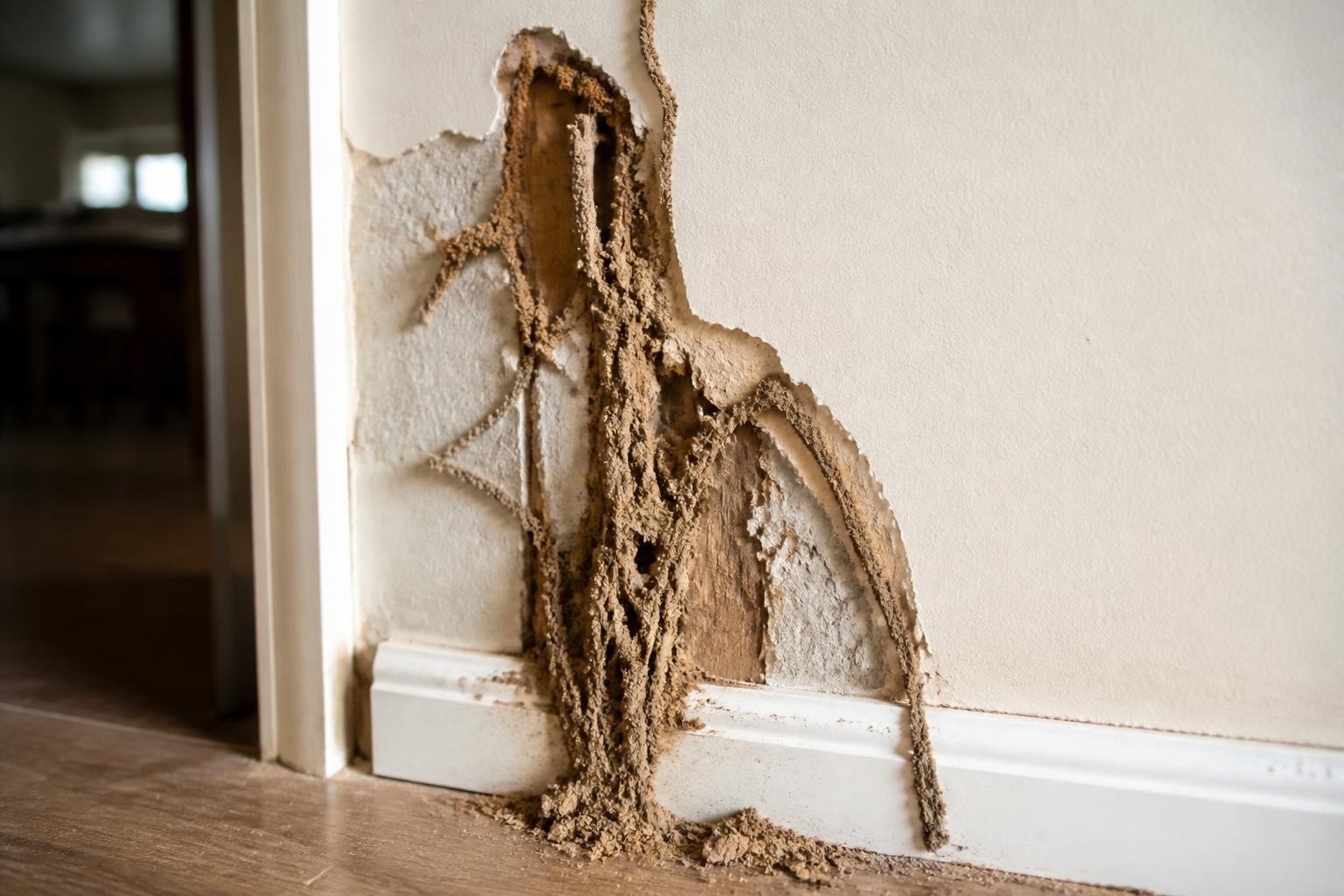
Termite nests on walls differ significantly based on the species involved. Subterranean termites, the most common culprits in Virginia, typically construct mud tubes and shelter tubes rather than exposed nests. These tubes appear as pencil-width tunnels made from soil, wood particles, and saliva that travel vertically along foundation walls and interior surfaces.
Drywood termites take a different approach. These insects establish colonies directly within wooden structures, creating galleries and chambers inside the wood itself. When drywood termite nests develop, homeowners might notice small kickout holes where pellets are expelled, rather than massive external structures.
The Science Behind Termite Construction
Research has shown fascinating patterns in how termites build their architectural masterpieces. Studies examining network efficiency in termite nest construction reveal that colonies follow simple rules that create remarkably complex structures. Each termite responds to local chemical signals and environmental conditions, resulting in efficient networks of tunnels and chambers.
The construction process involves thousands of worker termites carrying tiny particles of material. They cement these particles together using a combination of saliva, feces, and chewed wood. This biological cement creates surprisingly durable structures that can withstand environmental pressures while maintaining optimal humidity levels inside the nest.
Identifying a Termite Nest on Wall Surfaces
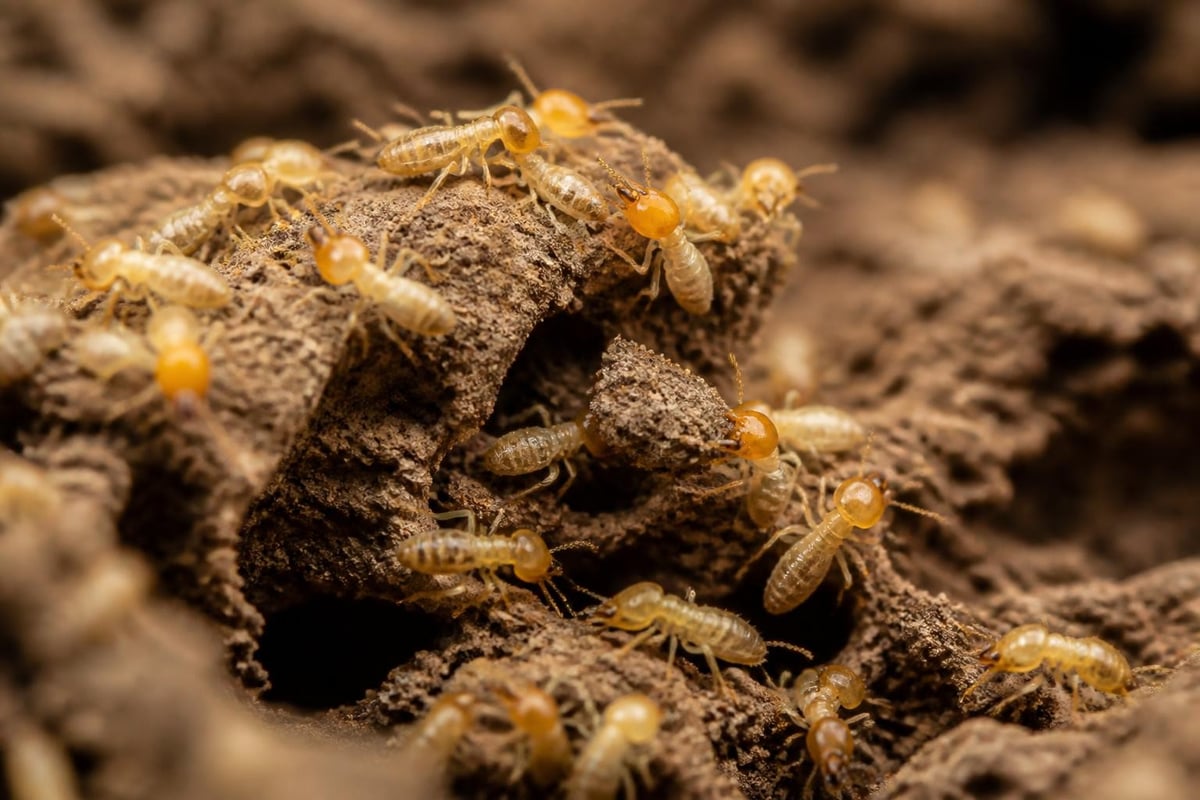
Visual identification starts with understanding what you're looking for. A termite nest on wall areas typically manifests as brown or tan mud-like formations attached to vertical surfaces. These structures feel firm to the touch and appear deliberately constructed rather than accidental.
Key visual indicators include:
- Vertical mud tubes ranging from pencil-width to several inches across
- Branching patterns that spread across wall surfaces
- Discoloration or moisture stains around nest areas
- Small holes or gaps in drywall where termites enter and exit
- Hollow-sounding walls when tapped gently
- Bubbling or peeling paint that resembles water damage
The location matters significantly. Basements and crawl spaces provide ideal conditions for subterranean species, while attics and upper floors more commonly host drywood varieties. Exterior walls facing soil contact zones present the highest risk for visible nest development.
Differentiating Termite Nests from Other Structures
Many homeowners confuse termite nests with wasp nests, mud dauber constructions, or simple dirt accumulation. Termite structures maintain consistent moisture content and appear darker than surrounding materials. Unlike wasp and bee nests, which have paper-like textures, termite nests feel grainy and soil-based.
Pressing gently on a suspected nest area can provide clues. Termite structures resist light pressure but can be broken with moderate force, revealing hollow chambers inside. Active nests may show termites scurrying when disturbed, though most activity occurs behind wall surfaces where colonies feel protected.
Why Termites Build Nests on Walls
Understanding the motivation behind wall nest construction helps property owners prevent future infestations. Termites select wall locations based on several environmental factors that support colony survival and expansion.
Moisture availability drives many nest placement decisions. Walls with plumbing leaks, condensation issues, or poor ventilation create the humid microenvironments termites require. A termite nest on wall surfaces near bathrooms, kitchens, or exterior-facing walls often indicates underlying moisture problems that need addressing beyond pest elimination.
Primary factors influencing wall nest locations:
- Proximity to food sources – Walls containing wooden studs, paper backing on drywall, or cellulose insulation
- Protected access routes – Cracks in foundations, gaps around utility penetrations, or soil-to-wood contact points
- Optimal temperature ranges – Interior walls maintaining 75-95°F year-round
- Humidity levels – Areas with 60% or higher relative humidity
- Limited disturbance – Quiet zones away from regular human activity
Research on termite nest growth patterns demonstrates how colonies expand strategically toward resource-rich areas. When a mature colony discovers an ideal wall location, scout termites mark the route with pheromone trails, leading thousands of workers to establish secondary nest structures.
Seasonal Patterns in Nest Development
Richmond VA experiences distinct seasonal variations that influence termite nest visibility. Spring and early summer bring swarming periods when reproductive termites leave established colonies to form new ones. During these months, homeowners often first notice a termite nest on wall areas as newly established colonies begin construction.
Fall and winter reduce visible activity but don't eliminate the threat. Colonies retreat deeper into protected wall cavities, continuing to feed and expand even when surface activity decreases. This makes year-round vigilance essential for catching infestations before they cause extensive damage.
| Season | Termite Activity Level | Nest Visibility | Risk Factors |
|---|---|---|---|
| Spring | Very High | High – Swarming | New colony establishment |
| Summer | High | Moderate | Rapid expansion |
| Fall | Moderate | Low | Deep retreat |
| Winter | Low-Moderate | Very Low | Hidden activity continues |
Health and Structural Risks
The presence of a termite nest on wall structures indicates an established colony that has already caused damage. Unlike occasional pest visitors, termites live in your walls permanently, consuming structural materials 24 hours daily. A single colony can contain anywhere from several thousand to several million individuals, depending on maturity.
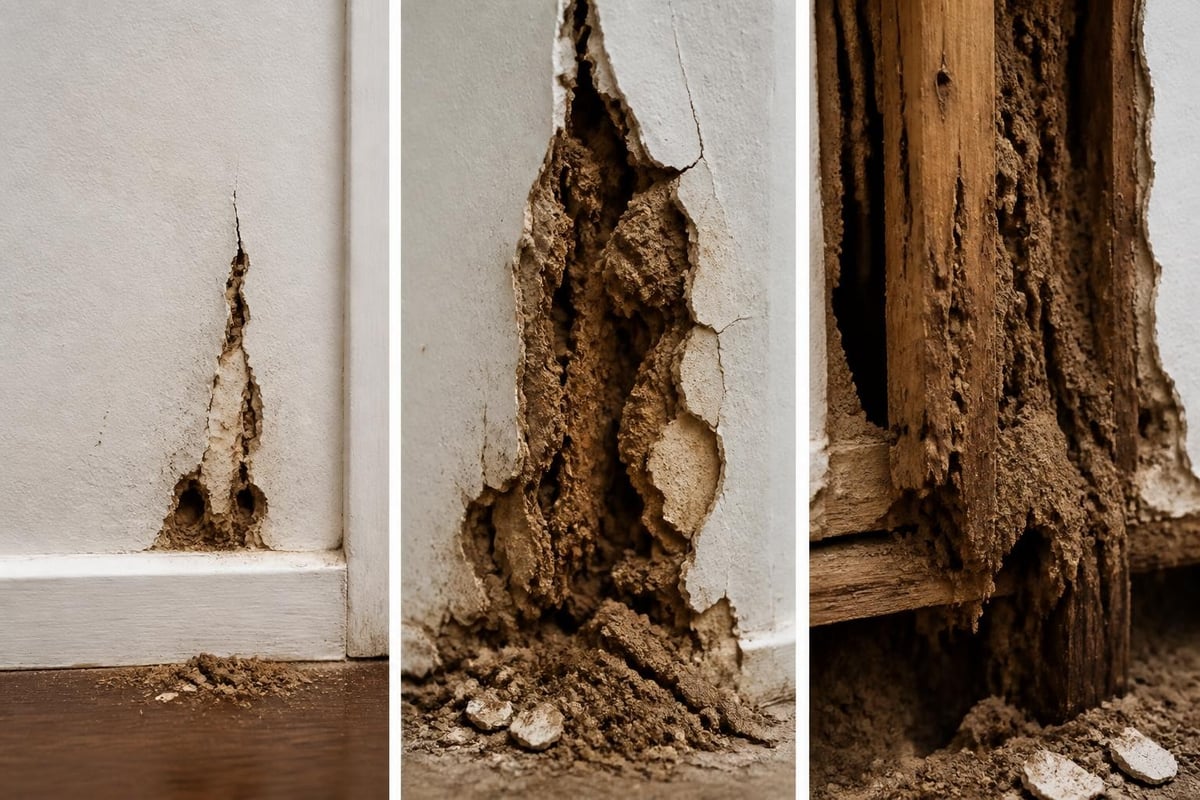
Structural damage progresses through predictable stages. Initial infestations compromise surface materials like drywall paper and paint. As colonies mature, they penetrate deeper into wooden framing, floor joists, and support beams. Advanced infestations can weaken load-bearing structures to the point of failure, creating genuine safety hazards.
Hidden Damage Behind Visible Nests
What you see represents only a fraction of the actual infestation. Studies using curvature-driven growth models to analyze termite nest architecture reveal that visible portions typically connect to much larger internal networks. For every square foot of visible nest material, several cubic feet of internal galleries may exist within wall cavities.
This hidden damage explains why professional inspection using specialized equipment becomes necessary. Thermal imaging cameras, moisture meters, and acoustic sensors detect termite activity that visual inspection misses. Understanding what termites in walls look like helps homeowners recognize early warning signs before nests become visible.
Professional Inspection and Assessment Methods
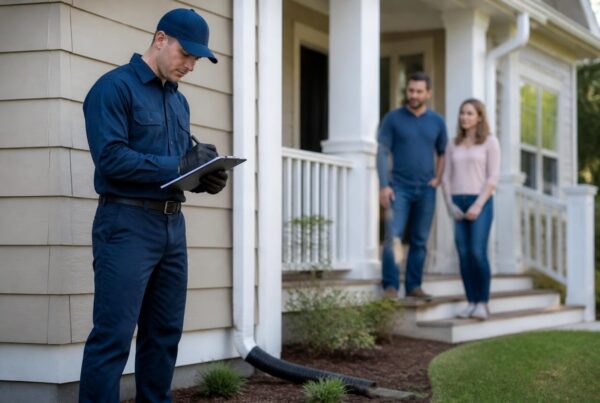
When you discover a termite nest on wall areas, resist the urge to remove it yourself. Disturbing the nest may cause the colony to relocate deeper into your home's structure, making treatment more difficult and expensive. Instead, professional pest control services in Richmond VA employ systematic inspection protocols that map the full extent of infestation.
Comprehensive inspection includes:
- Visual examination of all accessible areas including basements, crawl spaces, and attics
- Moisture meter readings to identify conducive conditions
- Thermal imaging to detect temperature variations indicating termite activity
- Acoustic sensors that pick up feeding sounds within walls
- Probing and tapping to assess structural integrity
- Exterior perimeter inspection for soil contact and entry points
Professional inspectors document findings with detailed reports, photographs, and treatment recommendations. This documentation proves invaluable for insurance claims, real estate transactions, and tracking treatment effectiveness over time. For termite identification purposes, inspectors may collect specimens to confirm species, as treatment approaches vary significantly between subterranean and drywood varieties.
Advanced Detection Technologies
Modern pest control incorporates technologies that reveal hidden infestations without destructive exploratory procedures. Infrared cameras detect temperature differentials caused by termite metabolic heat and moisture accumulation in active galleries. These non-invasive methods protect your walls while providing accurate infestation mapping.
Acoustic emission sensors represent another breakthrough technology. These devices detect the characteristic sounds of termite feeding and movement, pinpointing active zones within wall cavities. When combined with moisture meters and visual inspection, these tools create a complete picture of infestation severity and colony locations.
Treatment and Removal Strategies
Addressing a termite nest on wall surfaces requires integrated pest management approaches that eliminate current colonies while preventing reinfestation. Treatment selection depends on termite species, infestation extent, structural considerations, and property-specific factors.
Liquid Termiticide Treatments
Subterranean termite infestations respond well to liquid barrier treatments applied around foundation perimeters and within wall cavities. Licensed pest control professionals drill small access holes to inject termiticide into wall voids where termites travel. These non-repellent formulations allow termites to contact the treatment and transfer it throughout the colony, achieving comprehensive elimination.
The treatment creates a continuous chemical barrier in soil surrounding the foundation. Termites attempting to enter or exit through treated zones receive lethal doses, protecting structures from new infestations. Modern formulations remain effective for 5-10 years when properly applied, providing long-term protection.
Baiting Systems and Monitoring
Termite baiting systems offer an alternative approach that targets colonies at their source. Stations installed around the property perimeter contain cellulose monitors that technicians check regularly. When termites discover bait stations, monitors are replaced with active bait containing slow-acting toxins.
Baiting system advantages:
- Minimal structural intrusion
- Eliminates entire colonies including queens
- Environmentally sensitive formulations
- Ongoing monitoring detects new activity
- Adaptable to various property types
Worker termites consume bait and share it with colony members through feeding behaviors. The delayed action allows widespread distribution before termites die, ensuring the toxin reaches reproductive individuals. Complete colony elimination typically requires 2-4 months of active baiting.
Localized Treatment Options
When infestations remain confined to specific wall sections, spot treatments offer targeted solutions. Injectable foams, dust formulations, and wood treatments applied directly to affected areas eliminate local populations without whole-structure treatment. These approaches work best for drywood termite nests where colonies remain contained within wooden members.
Professional pest control services in Richmond VA assess whether spot treatments provide adequate protection or if comprehensive treatment becomes necessary. Factors including property age, construction type, and infestation history influence these recommendations.
Prevention and Long-Term Protection
Successfully treating a termite nest on wall areas solves the immediate problem, but preventing recurrence requires addressing underlying conditions that attracted termites initially. Comprehensive prevention integrates moisture control, structural modifications, and ongoing monitoring.
Essential prevention measures:
- Eliminate moisture sources – Repair leaks, improve drainage, install vapor barriers
- Remove wood-to-soil contact – Maintain 6-inch clearance between soil and wooden structures
- Seal entry points – Caulk cracks in foundations, seal utility penetrations
- Improve ventilation – Ensure adequate airflow in crawl spaces and attics
- Regular inspections – Annual professional inspections catch new activity early
- Maintain treatment barriers – Reapply termiticides according to manufacturer recommendations
Richmond VA homeowners particularly benefit from crawl space management, as these areas often provide termite entry points. Professional crawl space services address moisture problems, install vapor barriers, and create environments hostile to termite establishment.
Moisture Management as Primary Defense
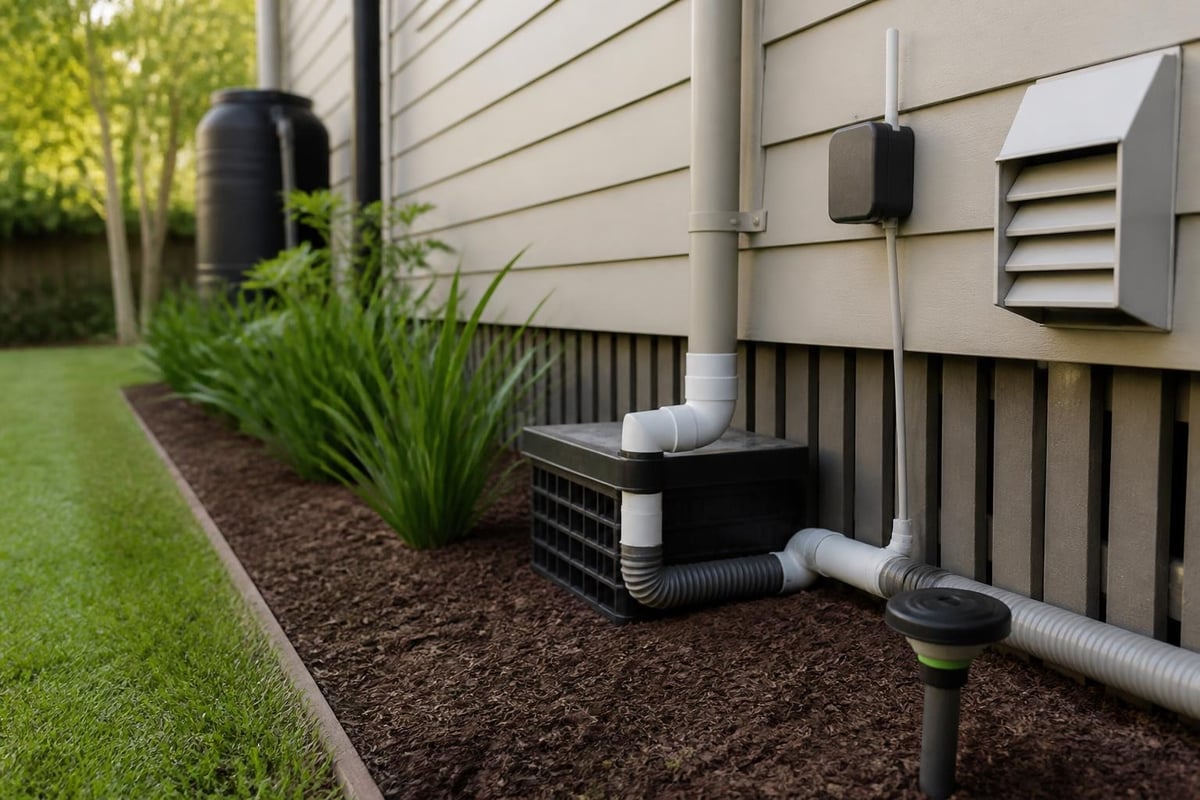
Termites require moisture to survive, making water control your most effective prevention tool. Crawl spaces with standing water, condensation on pipes, or damp soil provide ideal conditions for subterranean termite colonies. Installing dehumidifiers, improving drainage, and encapsulating crawl spaces dramatically reduces termite attractiveness.
Gutters and downspouts deserve special attention. When these systems fail to channel water away from foundations, soil moisture increases adjacent to your home's perimeter. This creates highways for subterranean termites to access wall structures. Maintaining functional drainage systems protects against numerous moisture-related problems beyond termites.
Regional Considerations for Richmond VA Properties
Richmond's climate and housing characteristics create specific termite challenges. The region's humid subtropical climate with hot summers and mild winters extends termite active seasons beyond what colder climates experience. Historic neighborhoods with older construction often have direct wood-to-soil contact that modern building codes prohibit.
Subterranean termites, particularly Eastern subterranean termites (Reticulitermes flavipes), dominate Richmond area infestations. These species establish massive underground colonies that can contain millions of individuals, sending out exploratory tubes that eventually result in a termite nest on wall surfaces when suitable conditions exist.
Neighborhood-Specific Risk Factors
Different Richmond neighborhoods present varying termite risks based on housing stock age, construction methods, and environmental factors. Areas like Court End with historic homes often show higher infestation rates due to older construction techniques and aged wooden structures. Modern developments may have better initial protection but still require vigilance as structures age.
Properties near wooded areas or with significant landscaping face elevated risks. Mulch beds against foundations, firewood storage near structures, and tree stumps left to decay all attract termites closer to homes. These landscape features essentially invite termites to explore wall structures for suitable nesting sites.
| Richmond Area | Primary Risk Factors | Prevention Priority |
|---|---|---|
| Historic Districts | Aged wood, soil contact | Foundation barriers |
| Suburban Areas | Landscaping, moisture | Drainage management |
| Newer Construction | Settling cracks | Regular inspection |
| Commercial Properties | Multiple entry points | Comprehensive monitoring |
When to Call Professional Pest Control
While homeowners can implement certain preventive measures independently, discovering a termite nest on wall areas demands professional intervention. The specialized knowledge, equipment, and materials required for effective termite elimination exceed DIY capabilities in virtually all circumstances.
Situations requiring immediate professional help:
- Visible termite nests or mud tubes on walls
- Hollow-sounding walls or floors
- Discarded termite wings near windows or doors
- Blistering or darkening of wood surfaces
- Tight-fitting doors or windows indicating structural warping
- Small piles of sawdust-like frass beneath wooden items
Professional pest control providers offer warranties backing their work, something impossible with DIY treatments. These guarantees typically cover retreatment if termites return within specified periods, protecting your investment in treatment services. Licensed professionals also carry liability insurance protecting homeowners from treatment-related damages.
What Professional Services Include
Comprehensive termite services extend beyond initial treatment. Reputable companies provide detailed pre-treatment inspections, customized treatment plans, and ongoing monitoring. Many offer annual inspection programs that catch new infestations before significant damage occurs.
Treatment documentation proves essential for property value. When selling a home, prospective buyers routinely request termite inspection reports and treatment records. Professional treatment with proper documentation reassures buyers that termite issues have been addressed correctly, potentially preventing deal complications.
Understanding Treatment Costs and Value
Termite treatment represents a significant investment that homeowners should view through the lens of structural protection rather than simple pest elimination. The cost of addressing a termite nest on wall areas varies based on infestation severity, property size, treatment method, and regional labor rates.
Richmond VA treatment costs typically range from $1,500 to $4,000 for conventional liquid treatments of average-sized homes. Baiting systems may cost $2,000 to $5,000 for installation plus annual monitoring fees. Spot treatments for limited infestations start around $500 but may prove inadequate for established colonies.
Comparing Treatment Investment to Damage Costs
These treatment costs pale compared to structural repair expenses. Termites cause an estimated $5 billion in property damage annually across the United States, with individual homeowners facing repair bills from $3,000 to $30,000 or more. Advanced infestations requiring replacement of floor joists, wall studs, or roof rafters can exceed $50,000.
Insurance coverage adds another consideration. Standard homeowners insurance policies exclude termite damage, considering it preventable through proper maintenance. This makes proactive treatment and prevention essential for protecting your financial investment. Some companies offer termite damage insurance as policy riders, but these typically require professional prevention programs.
Cost comparison framework:
| Scenario | Typical Cost Range | Timeline | Long-term Value |
|---|---|---|---|
| Professional Treatment | $1,500-$5,000 | Immediate | High – Prevents damage |
| Minor Structural Repairs | $3,000-$10,000 | After discovery | Medium – Reactive response |
| Major Structural Repairs | $10,000-$50,000+ | Advanced damage | Low – Costly consequence |
| Annual Monitoring | $300-$500/year | Ongoing | Very High – Early detection |
Legal and Real Estate Implications
Property transactions involving homes with current or past termite infestations face special considerations. Virginia law requires sellers to disclose known termite activity and previous treatment history. Discovering a termite nest on wall structures during the sale process can derail transactions unless properly addressed.
Pre-listing termite inspections allow sellers to address issues before marketing properties. This proactive approach prevents surprises during buyer inspections and demonstrates responsible property maintenance. Treating active infestations and providing documentation of successful elimination often satisfies buyer concerns.
Impact on Property Values
Untreated termite infestations can reduce property values by 10-20% or more, depending on damage severity. Buyers negotiate significant price reductions when inspections reveal active colonies, and some may walk away entirely from properties with extensive damage. Professional treatment with transferable warranties helps maintain property values by assuring buyers of effective pest elimination.
Lenders increasingly require termite clearance letters before approving mortgage financing, particularly for properties showing infestation history. Working with established pest control companies familiar with real estate transaction requirements ensures documentation meets lender standards.
Environmental and Safety Considerations
Modern termite treatments prioritize environmental responsibility while maintaining effectiveness. The shift from older broad-spectrum pesticides to targeted formulations reduces environmental impact while improving colony elimination rates. Understanding treatment options helps homeowners make informed decisions balancing effectiveness with environmental concerns.
Non-repellent liquid termiticides work at extremely low concentrations, targeting termite biology specifically. These products break down relatively quickly in soil, minimizing persistence while maintaining sufficient duration for colony elimination. Proper application by licensed professionals ensures treatments remain in designated treatment zones rather than spreading to surrounding environments.
Safe Treatment Practices
Professional pest control services follow strict protocols protecting occupants, pets, and beneficial organisms. Treatment zones are clearly marked, and occupants receive detailed safety instructions regarding re-entry times and precautions. Most modern treatments allow same-day re-entry after applications dry, minimizing disruption to daily routines.
Baiting systems offer the lowest environmental impact since active ingredients remain contained within bait stations. Only termites accessing stations encounter treatments, leaving other organisms unaffected. This targeted approach appeals to environmentally conscious homeowners while providing effective colony elimination.
Coordinating with Related Home Services
Discovering a termite nest on wall areas often reveals related issues requiring professional attention beyond pest control. Termite infestations frequently coincide with moisture problems, inadequate ventilation, or structural vulnerabilities that comprehensive home protection must address.
Crawl space conditions play particularly important roles in termite activity. Damp, poorly ventilated crawl spaces create perfect environments for subterranean termite colonies. Professional crawl space encapsulation addresses these conditions while providing additional benefits including improved energy efficiency, better indoor air quality, and reduced moisture-related problems.
Integrated home protection services:
- Crawl space encapsulation – Vapor barriers, dehumidification, structural drying
- Insulation services – Damaged material replacement, moisture-resistant options
- Foundation repair – Sealing cracks that provide termite entry points
- Drainage improvement – Grading, French drains, gutter enhancements
- Structural repairs – Replacing termite-damaged wooden components
Coordinating these services with termite treatment creates comprehensive solutions addressing root causes rather than symptoms alone. This integrated approach provides better long-term value and more complete protection than treating pest issues in isolation.
Myths and Misconceptions
Termite management suffers from numerous myths that lead homeowners toward ineffective or counterproductive responses. Separating fact from fiction helps property owners make sound decisions when facing a termite nest on wall surfaces.
Common termite myths:
-
Myth: Concrete block or brick homes are termite-proof
-
Reality: Termites access any structure through tiny cracks and gaps, regardless of exterior material
-
Myth: Termites only affect old homes
-
Reality: New construction faces infestation risks within months if conditions favor termite activity
-
Myth: DIY treatments effectively eliminate termite colonies
-
Reality: Over-the-counter products rarely reach colonies or provide lasting protection
-
Myth: Removing visible nests solves the problem
-
Reality: Visible nests represent small portions of larger infestations requiring comprehensive treatment
-
Myth: Winter eliminates termite activity
-
Reality: Colonies remain active year-round in protected areas like wall cavities and crawl spaces
Understanding these realities helps homeowners approach termite issues with appropriate urgency and realistic expectations. Professional guidance becomes particularly valuable when evaluating treatment options and prevention strategies.
Protecting your Richmond VA property from termite damage starts with understanding what a termite nest on wall surfaces indicates and responding appropriately. The combination of proper identification, professional treatment, and comprehensive prevention creates the most effective defense against these destructive pests. Whether you're dealing with an active infestation or want to implement preventive measures, SanPro brings decades of experience in pest control, crawl space management, and structural protection to help Richmond area homeowners maintain safe, termite-free properties.